Presenting visual and performance art in unexpected public spaces.

Unlisted: Second Steel- Video interview with Christina Kruise

By Matthew Morowitz

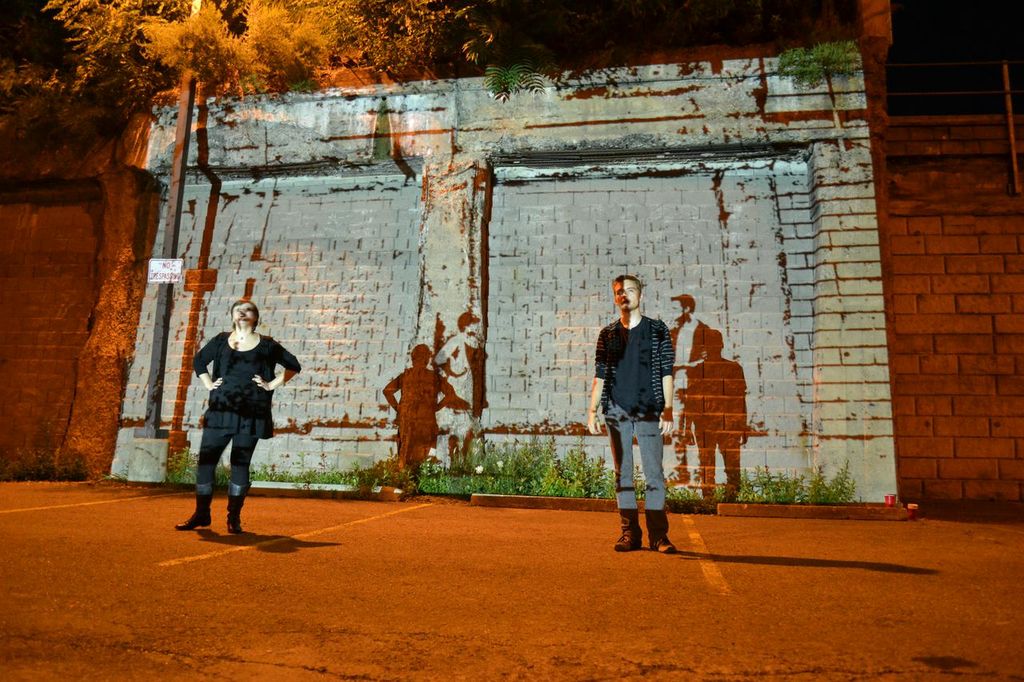
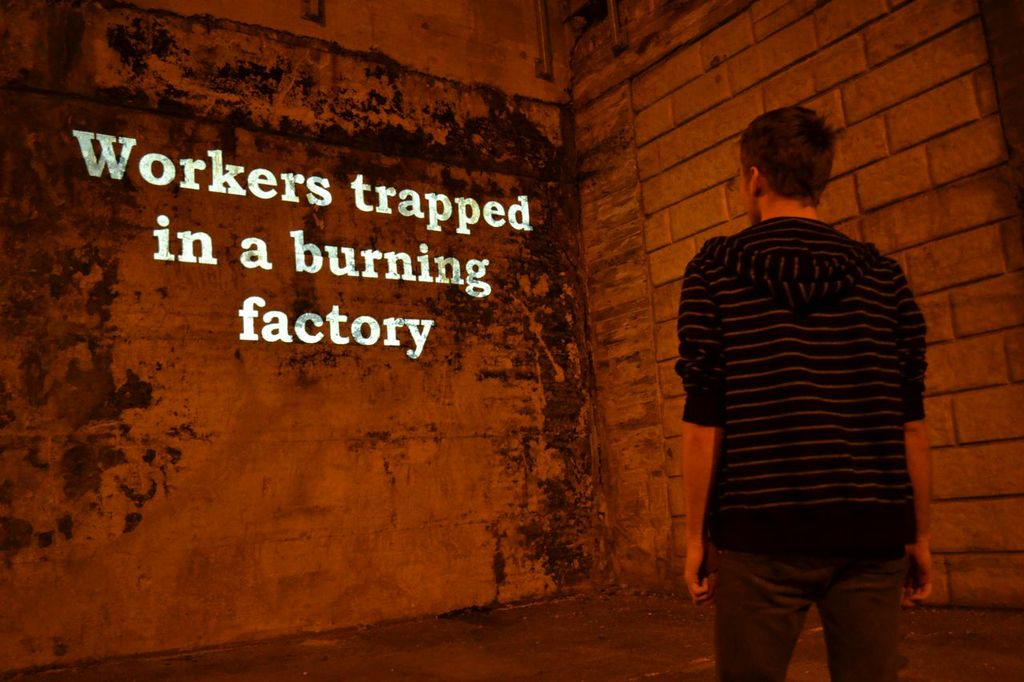
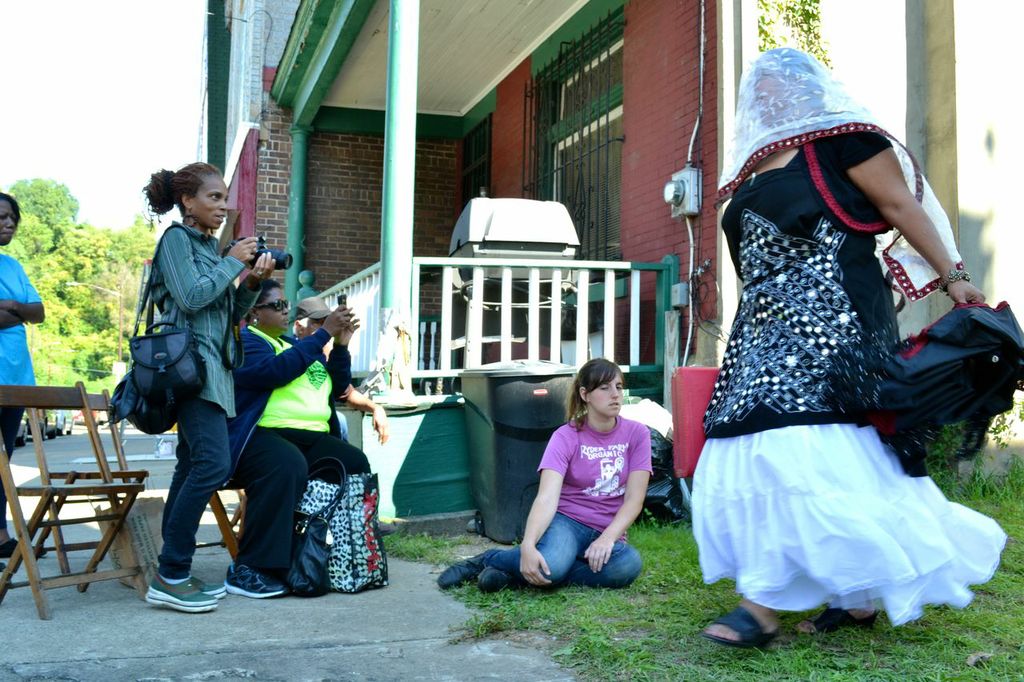
From September 25-28, 2013, the next phase of the Unlisted project, “Second Steel,” took place in Pittsburgh, Pennsylvania and was organized by project managers Patrick Berger, Christina Kruise, and Cory Tamler, community outreach coordinator Lily Junker, and expenses manager LaShawn Keyser.  In its second phase, the project questioned the idea of revitalization within the city through three site-specific performances that were lead by three different teams of curators and artists.  Team 1, which worked in the East Liberty area on a performance titled “Townhouse,” was lead by curators Alexandra Oliver and Carolina Falcão and consisted of artists Taylor Knight, Riva Strauss, Anna Sutherland Thompson.  Team 2, working in the North Shore on a performance titled “Here is Nothing Because Here is Nothing and Nothing is Me,” was lead by Mikana Maeda and Ana Letunić and featured artists Julianne Avolio, Christian Bell, Matthew Conboy, Dylan Meyers, Dino Pešut, and Michael Young.  Finally, Team 3, which was lead by Gavin White and Monika Ponjavić and featured artists Juan M. Aldape, Paul Farrell, Edwin Lee Gibson, Colin Lalonde, Windafire, Christina Springer, and Marina Radulj, performed their piece, “A Village in the Woods on a Hill in the City at the Crossroads of the World,” in the Hill District.

In the video below, performance curator and project manager Christina Kruise, who had discussed the first Unlisted in a previous feature, was able to sit down with Art in Odd Places (AiOP) and answer some questions about this phase of the project, revitalization, and what was learned so far.  Be sure to also check out some of the images from the performances, also included below.

Note: Unlisted: Second Steel would not have been possible if it were not for the support and sponsorship provided by New Sun Rising, the Pittsburgh Partnership for Neighborhood Development, a PPA Project Stream Award from Pennsylvania Partnership in the Arts, the Republika Srpska Ministry of Education and Culture, Townhouse, the Pittsburgh Parks Conservancy, ZeroFossil, Friendship Development Associates, and Alco Parking.

” Christina Kruise on ‘Unlisted: Second Steel.'” Video courtesy of Matthew Morowitz.
8VbBpdkZT46ulXRtNukrg6Mr05jl8OUfqYjplTu7Kek,KZB7CUGA-yYxCZziisuozxZLAXW5_D7BcWllNgvan08

“Performance #2: Here is Nothing Because Here is Nothing and Nothing is Me (Alco Parking Lot 7H):  Dylan Meyers, Projection by Matt Conboy ‘Workers trapped in a burning factory. It was a sunny day.'”Photo Courtesy of Christina Kriuse.

QYsTdecUMm5-LWe7Ne7mttW6psgTdpyt40OxlfzAzdQ,U-0a2SGUeK_o3QYvyPvi9t_aMiYbTVa7lXcCdHTmA2I

“Performance #1: Townhouse, East Liberty: Riva Strauss and Anna Sutherland Thompson dance as spectators listen to interviews.” Photo Courtesy of Christina Kriuse.


Btv-uGTVYdsMzqCE_U0rFMXyAJtynXE8vY3dVfwHpOk

“Performance 3: A Village in the Woods on a Hill in the City at the Crossroads of the World (2308 Centre Avenue): Colin Lalonde and Juan M. Aldape ‘A struggle for property.'”Photo Courtesy of Christina Kriuse.
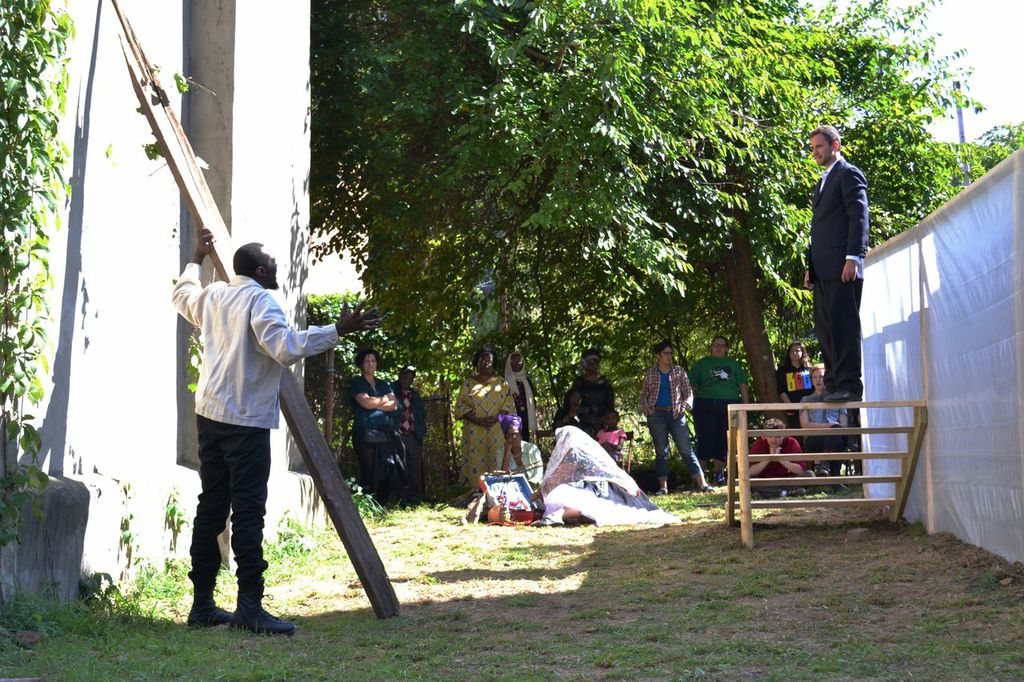
EDPmq3kfx-wAlzrlR_N0wfE3o3-mHbQ-EzD5VbrBf54,vbbNO0WpLFi2JHn3Zl1dfKiH8YDgqjO-a3aqAXL_NvE“Performance 3: A Village in the Woods on a Hill in the City at the Crossroads of the World (2308 Centre Avenue): Edwin Lee Gibson, Christina Springer, and Colin Lalonde. ‘Lines in a Tree.'”Photo Courtesy of Christina Kriuse.
--u6qNqe3D8j5FARKGMjy20Rap7ARlTiRqsiRI3Nlug,wbGk7LrXRt6mMZ78BYhZfmh9LjtkNqBmtlLquDrnikU

“Performance 3: A Village in the Woods on a Hill in the City at the Crossroads of the World (2308 Centre Avenue)Photo Courtesy of Christina Kriuse.
-ZkIYbOzDXHYQSGEEhvfrKKOVEJ3nbsY6xY9H7GSoSA,octs7nLcIluTnl-wiO4gcQrZ_udWvjR8Cillc5wZeKU

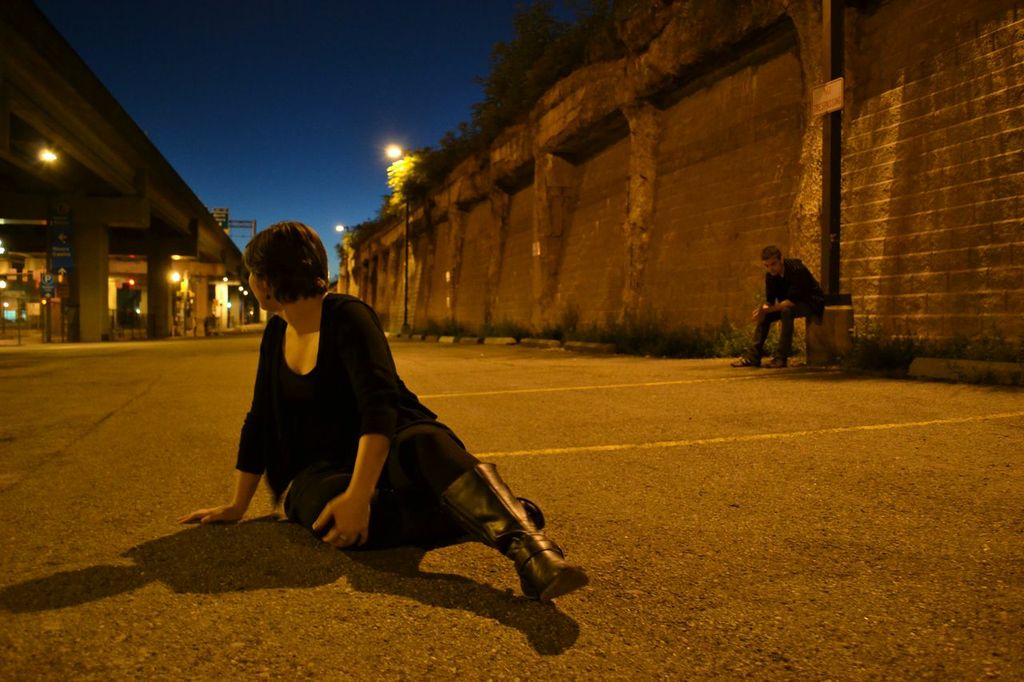
“Performance #2: Here is Nothing Because Here is Nothing and Nothing is Me (Alco Parking Lot 7H): Julianne Avolio, Dylan Meyers ‘She asks, will you love me? But I just put my head in her chest.'”Photo Courtesy of Christina Kriuse.

1luHRtzeY34e-QfDY3DshspaZSIzwsO7VxT2v3Io2wo,_DoZuIOuyj626fIQWGTyyjpFiNhiHxeliSzeNBYajmQ

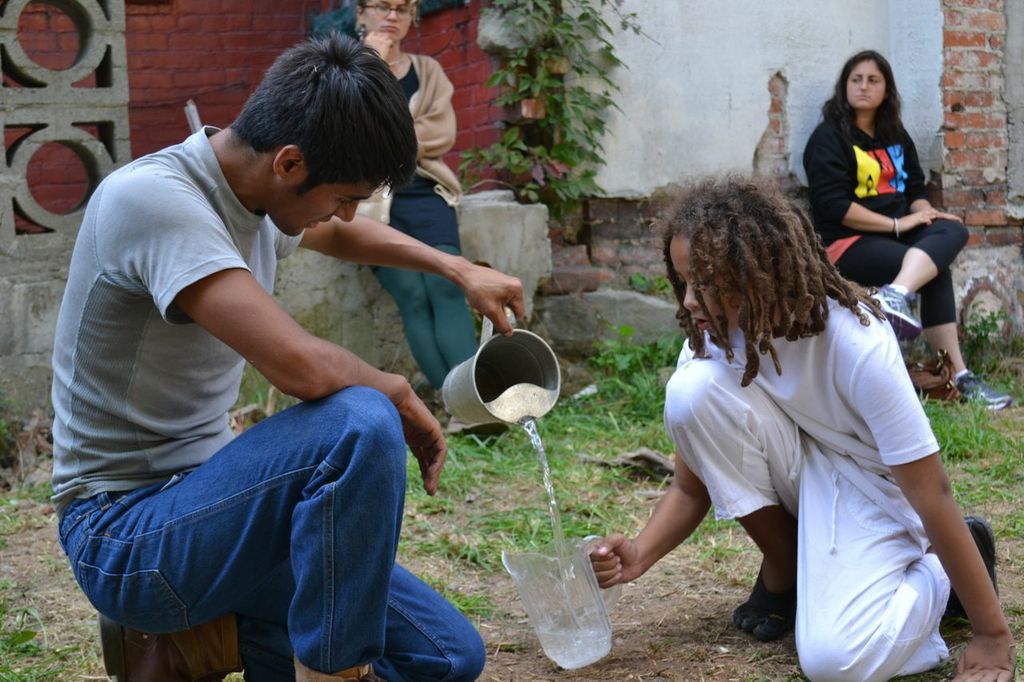
“Performance #1: Townhouse, East Liberty: Unlisted videographer, Louis Cappa, records while Riva Strauss dances in the Townhouse storefront.” Photo Courtesy of Christina Kriuse.
_LQm3jtc4XoTZovVPA4-htVK9rs05IIJYpptSmmga8c,bfzqWa957oWT3eT5SKbP6hFUITYbA3ndNgDnNVsEQto

“Performance 3: A Village in the Woods on a Hill in the City at the Crossroads of the World (2308 Centre Avenue): Juan M. Aldape and Windafire ‘Cycles.'”Photo Courtesy of Christina Kriuse.
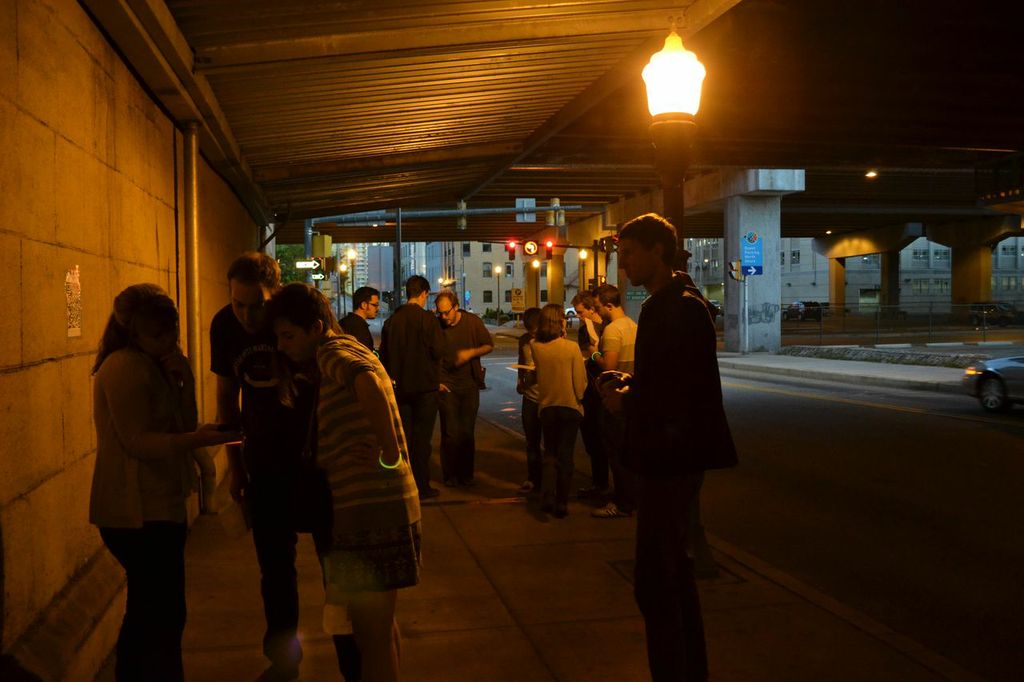
uOIpd6plgzKCCKWpGXrnNGE3Mg3mIyLrZTTf-9gyd2c,wkRiaAKyck3RxCuhqf2LcEzebSzx1Vzh5n1de4Yoej8“Performance #2: Here is Nothing Because Here is Nothing and Nothing is Me (Alco Parking Lot 7H): Spectators go on a QR code tour of the North Shore space.” Photo Courtesy of Christina Kriuse.
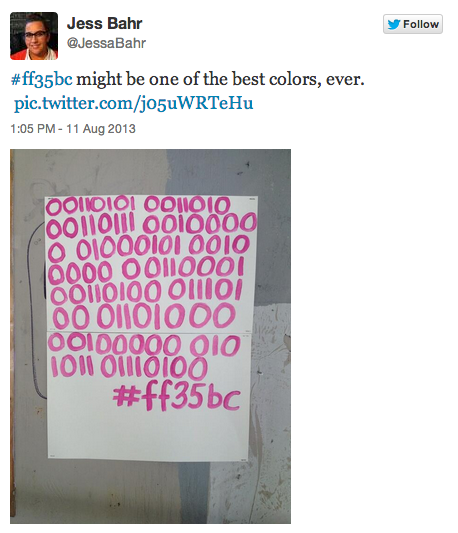
AiOP Number: Faith Holland’s binary

Today ends Art in Odd Places’s (AiOP) 2013 festival NUMBER.  Working off the theme, this year’s artists created works based around the idea of numbers in both literal and abstract ways.  Artist Faith Holland, for example, chose to work alongside the former interpretation, in order to bore “a digital hole into 14th Street’s brick-and-mortar physical existence.”

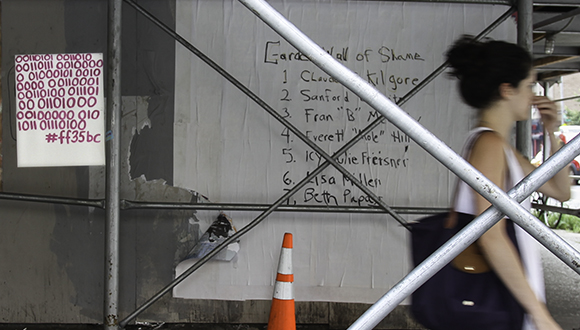
Holland’s project “#ff35bc binary” involves the artist translating addresses along 14th street into binary code, the language of computers, on posters and stickers.  #ff35bc on the other hand, is the color code for the shade of pink she is using to write out these binary addresses.  Before this project, #ff35bc only existed as a purely digital color, but Holland was able to have it translated into latex house paint.  For her, using pink is a strong signifier; it has connotations with femininity that no other color comes close.

ff35bc-binary-faith-holland

“ff35bc binary.” Photo courtesy of artist.

AiOP was able to talk with Holland and get some insight into what inspired her pink project:

Can you tell us a little bit about yourself and the kinds of work that you do?

I am a multimedia artist working in a lot of different forms—photography, video, GIFs, sculpture, performance—the medium suits the work and never the other way around. My work is particularly engaged in women and technology, which manifests itself in a lot of different ways from pussy GIFs to pussy cats to makeup, etc.

What attracted you to this year’s AiOP festival?

I participated in last year’s AiOP Festival: MODEL and really loved being part of such a diverse group of artists and projects. Given that a lot of my work is digital and works on the digital as subject matter, the Number theme definitely sealed the deal.

How are you interpreting the theme number?

I’m interpreting the theme quite literally and narrowly, working exclusively with the numbers zero and one, which together compose binary. Binary is a number-language that underwrites so much of the technology that we interact with on a daily basis, but it’s one that we cannot readily read and understand. I wanted to exploit this friction by translating everyday addresses into binary on posters and stickers, as if boring a digital hole into 14th Street’s brick-and-mortar physical existence.

But binary is only half of the equation, since the project is called #ff35bc binary. #ff35bc is a hex code for a particular shade of pink that has become increasingly important to my work. I love working with the color pink because it is such a strong signifier; I would argue that its connotation (girls, femininity) has a singularity that no other color comes close to. When my work became physical so did #ff35bc—I had what is a purely digital color translated into latex house paint. The digital and physical are intermixed in this project, both in material, language, and meaning.

What challenged did the theme present you when creating works for public space?

Like what I did for last year’s AiOP (public performance), I had never done a poster project before! There was a lot of logistics and courage that needed to be worked up to produce this work, but ultimately I’ve found 14th Street more hospitable to artistic intervention than one might expect.

What excites you about the prospect of presenting this work?

I’m excited about confusing people. The posters I’m making are hand-painted numbers in a bold pink. Alongside slick photographic advertisements for blue jeans and such-and-such’s latest album, the lo-finess of these posters sticks out. Unlike their advertisement neighbors, these posters require engagement and are not easily readable at a glance.

How has adapting your work to 14th street affected your process?

A lot! As an artist that spends all day at the computer, I not only have to use physical materials but I also have to leave my house to complete this project! 😉

Screen Shot 2013-09-15 at 1.22.37 PM

“ff35bc binary.” Screen shot courtesy of artist.

Have you come to learn anything new about 14th street while formulating your work?

I think the best and most important thing I’ve learned about 14th Street is that it’s busy and that enables you to get away with a lot. Fellow AiOP Jerry McGuire gave me a great pep talk, just go for it!

Was there any specific number that spoke out to you when formulating your work? Why

Zeros and ones! I’ve actually been working with those numbers a lot for a previous project, VVVVVV.xxx. After reading Sadie Plant’s book Zeros + Ones, the numbers became not only computer code, but also powerful metaphors for gender and its binarism.

Has formulating this work changed any preconceived notions you had about numbers?  Did you take anything from this experience that you plan on applying to future works?

After working with numbers for previous projects, this one in particular has made me think about the “naturalness” of numbers and quantifying. Why does referring to a street address as a series of 0s and 1s seem so foreign, but a similarly coded address like 527 E 14th St. seems so clear? I’m definitely going to continue to consider these issues; maybe I’ll even work up to the peculiarly case of number 2.