by John Critelli
Can machines have souls?
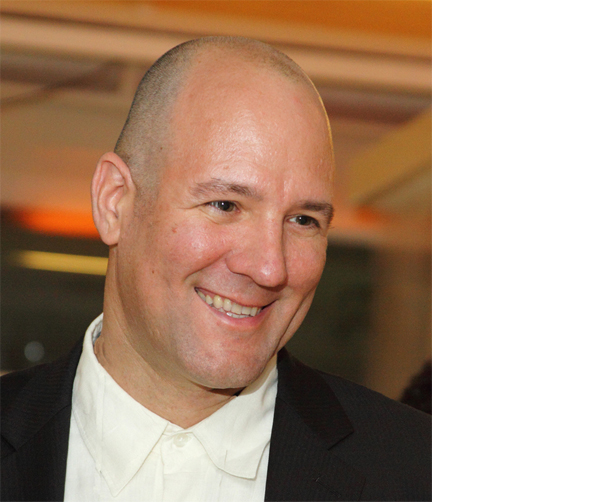
Scott Draves thinks they can.
“Computers and robots started out as literally mechanical,” he says, “but as they develop, they are getting more subtle and more magical.”
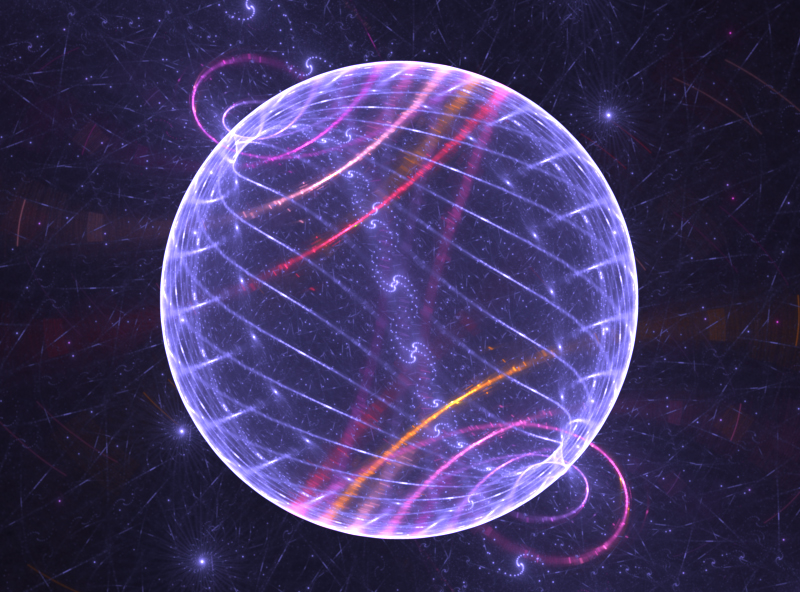
“Magical” certainly describes Drave’s project Electric Sheep.
Find this sheep
Electric Sheep is, at first glance, just a screen saver. But it may be the first step in bridging the gap between humans and machines. Draves says the project’s goal is to create an electronic life form that lives on a computer network.
But he needs help from thousands of fans.
“Electric Sheep is not a self-contained system,” he says. “It has porous borders, and what leaks into the machine and tweaks the algorithm is human.”
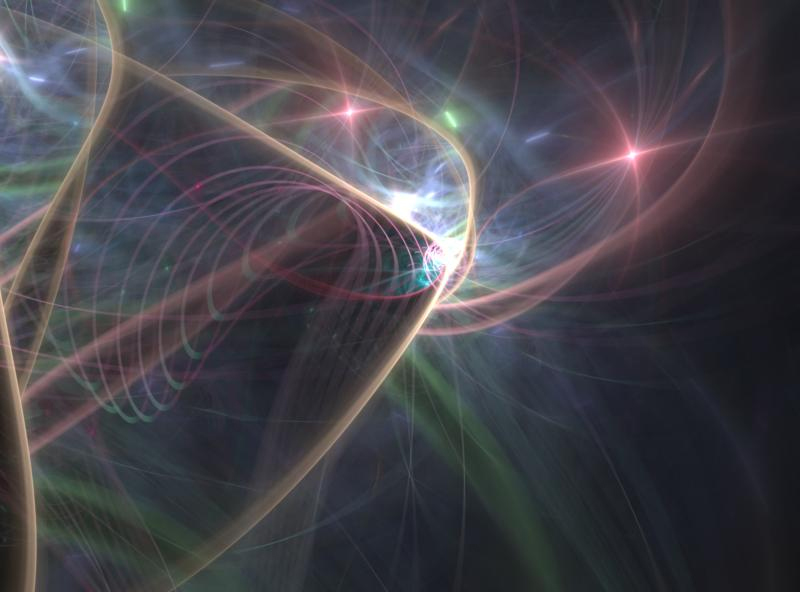
Users create vibrant animations, called “sheep,” which are uploaded to the Electric Sheep server. Those sheep become part of the screen saver, and other users vote for their favorites. Popular sheep get to “breed” with each other, creating all-new, computer-generated animations.
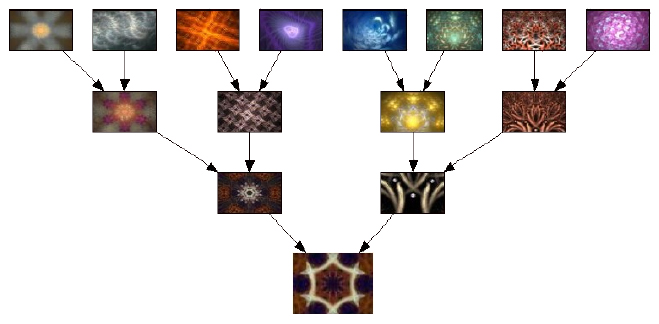
Image source
Draves sees this as a combination of evolution and intelligent design. He calls the process “creative amplification,” and hopes this amplification will continue until Electric Sheep reaches a “supercritical” stage.
At that point, the program will understand what people like well enough to create beautiful sheep on its own – without the voting process.
“That’s a milestone of the path from inanimate to alive,” Draves says.
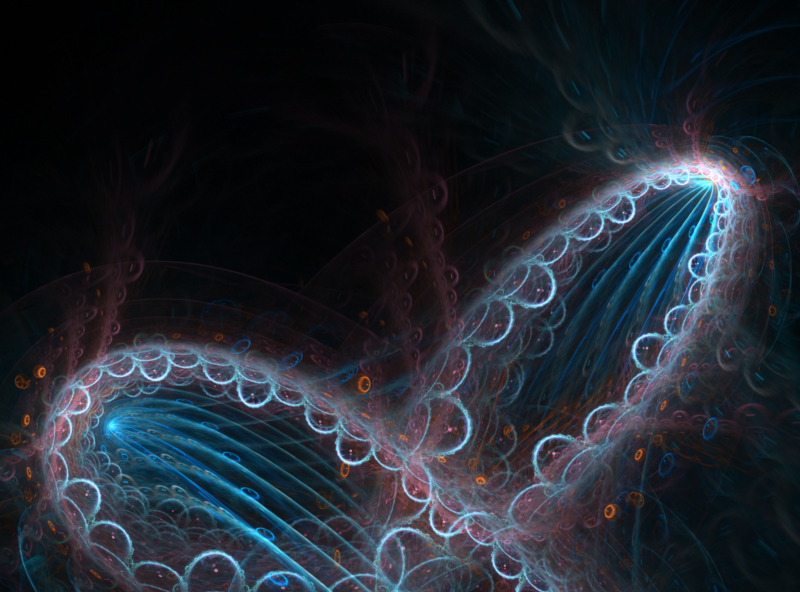
Find this sheep
Computers with souls
And he believes that once computers are alive, they can have souls. Not in the religious sense, but in the sense that they can achieve consciousness and self-awareness. In fact, he thinks computer consciousness is inevitable.
“For me it’s an issue of ‘when’ and ‘how’ more than ‘if,'” he says.
Draves tackles the “how” part with Electric Sheep.
“Some configurations of matter are more inviting to ‘soul,'” he says.
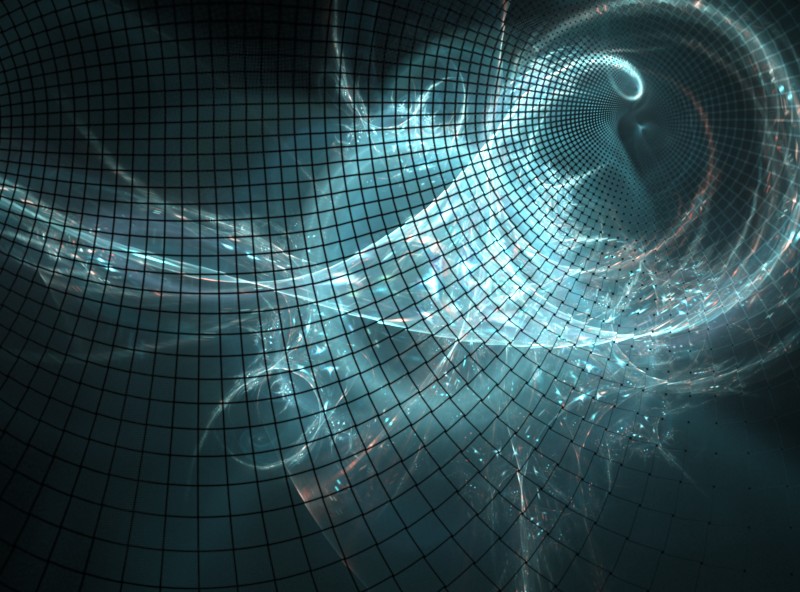
In this case, the configuration he refers to is Electric Sheep‘s “distributed computing” system. It uses processing power from over 450,000 computers, most of which belong to ordinary people who just decided to install the screensaver. Each computer renders a small part of the animations, collectively producing something that would be almost impossible with a single machine.
Find this sheep
The Flame algorithm
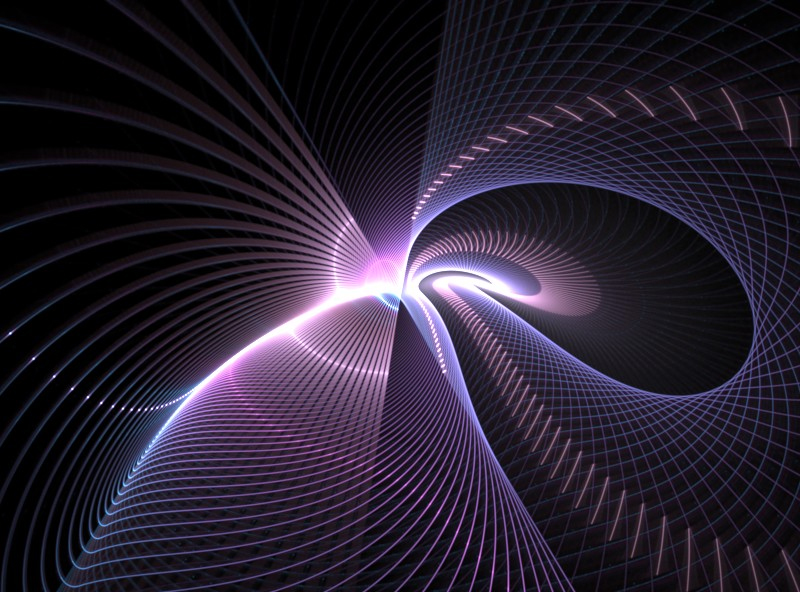
The animations are rendered with Draves’ Flame algorithm, which he developed in the late 1980s and early 1990s. He made the most progress in 1991, during an internship in Tokyo, Japan. He says the internship gave him “access to a graphics supercomputer and lots of free time.”
Find this sheep
But he still didn’t consider himself an artist, partly because digital art wasn’t popular at the time. Instead, he saw the Flame algorithm as a reaction against the computer graphics industry, which he says “was about realism and storytelling.”
Conversely, “Flame was about abstraction and emergence,” he says.
Find this sheep
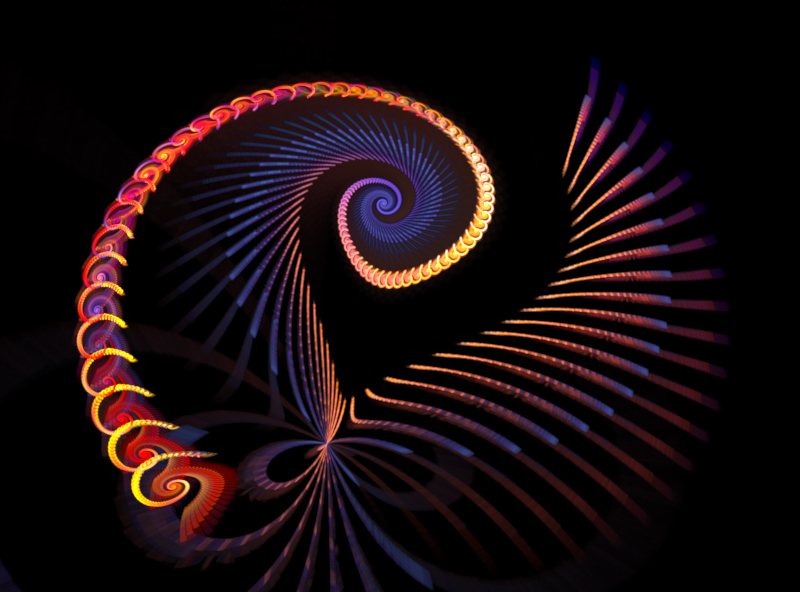
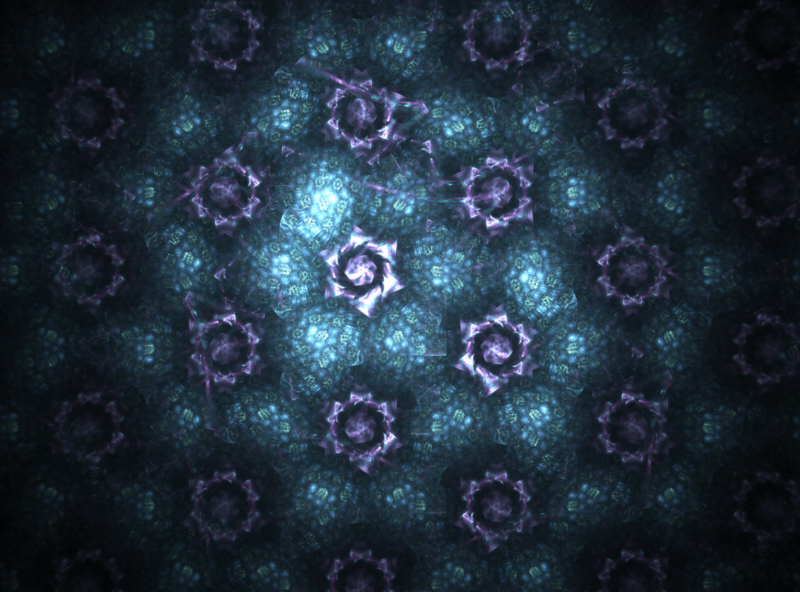
The algorithm creates patterns called fractals – shapes that contain many smaller versions of themselves. However, Draves doesn’t see himself as a fractal artist. He prefers to be called a visual and software artist.
“Most people who consider themselves ‘fractal artists’ are just turning a few knobs on software they’ve downloaded, so it’s not that creative or meaningful,” he says. On the other hand, he adds, “my work with Flame and Electric Sheep has a philosophy. They are engaged in conversation with our culture at large.”
Find this sheep
Life outside of Electric Sheep and the Flame algorithm
Draves had what he calls a “pretty normal” childhood in the suburbs of Pittsburgh, Pennsylvania.
“I was into math as a kid and discovered computers in 1978, taught myself to program, and have been obsessed ever since,” he says.
He graduated from Brown University in 1990 with a Bachelor of Science in Math, then went on to get a PhD from Carnegie Mellon University School of Computer Science. In 1997, he moved to the San Francisco Bay Area, where he worked for a series of tech startups, including DreamWorks Studios.
Find this sheep
But he continued to work on his art, and moved to New York City in 2005 to pursue it full time.
“That was going great until the financial crisis hit,” he says. “I wanted a family, so I decided to get a day job again.” Now he works for Google, ensuring the quality of Google Maps. And he has the family he always dreamed of.
“I am married to a brilliant and beautiful woman and we have three young children,” Draves says. “I get up at about 6:30 with the baby, get my older son to school at 8:00, then bike to work on the Hudson. I work for the man until 6:00, then go home and help get the kids to bed.”
This routine doesn’t leave much time for art.
“I get about 3 hours of work on my art before bed at midnight,” he says. “Weekends are when I can sometimes get a real block of time and accomplish something.”

Find this sheep
Download Electric Sheep and read our interview
But Draves gets a lot done, even with limited time. He recently worked with several programmers to develop a mobile version of Electric Sheep for Android Phones.
“We use the Live Wallpaper feature so it runs behind the icons on your home screen,” he says. “We developed some special tech so it plays smoothly without effecting your battery.”
He’s also working on a mobile game version for the iPad, which should be out this summer.
Click here to download the Android version of Electric Sheep, or click here to download the screen saver. Finally, read below for our full, unabridged interview with Draves.