Presenting visual and performance art in unexpected public spaces.

AiOP 2014 FREE Looking Back: Nicky Enright “Globo Exchange”

Under the theme of FREE, Art in Odd Places (AiOP) celebrated their 10th year engaging with works that celebrated ideas of openness, autonomy, and independence. As we prepare for AiOP 2015: RECALL and our exciting 11th year, we’re taking time to look back at some of the works that embodied last year’s theme and see what the artists learned by producing their pieces, and how working on 14th Street impacted their practices.

IMG_8901

Nicky Enright performing Globo Exchange.  Photo courtesy of the artist.

Can you describe your contribution to AiOP: FREE?

project title

Globo Exchange

Nicky Enright, AiOP 2014 FREE!

Project description

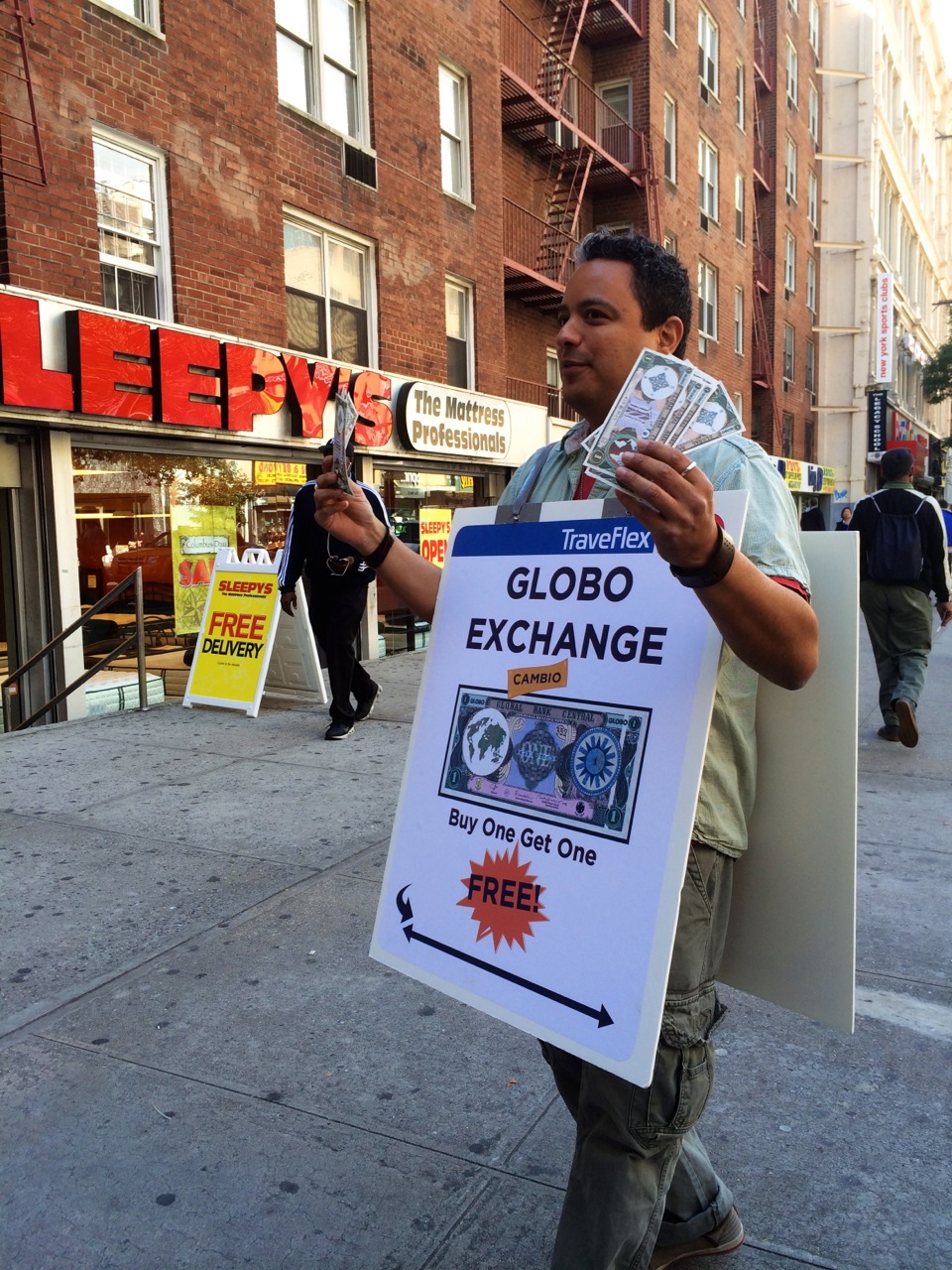
I did a performance called “Globo Exchange” where I exchanged my international currency for American dollars and other currency, offering a “buy one get one free” deal, so $1 = 2 Globos. I also was the DJ for the artist party, where I created the “Free Mix.”


Working in public space, one is often forced to deal with the unexpected. What surprising turns did your work take during AiOP: FREE?

I have been exchanging Globos since 2008 so I pretty much knew what to expect. But I was still surprised at how some people couldn’t wrap their brains around money as an art project – some folks had to assume that it was just a scam, that there could be no other value to it. It was also surprising that the Wall Street Journal got interested and did a piece on it.
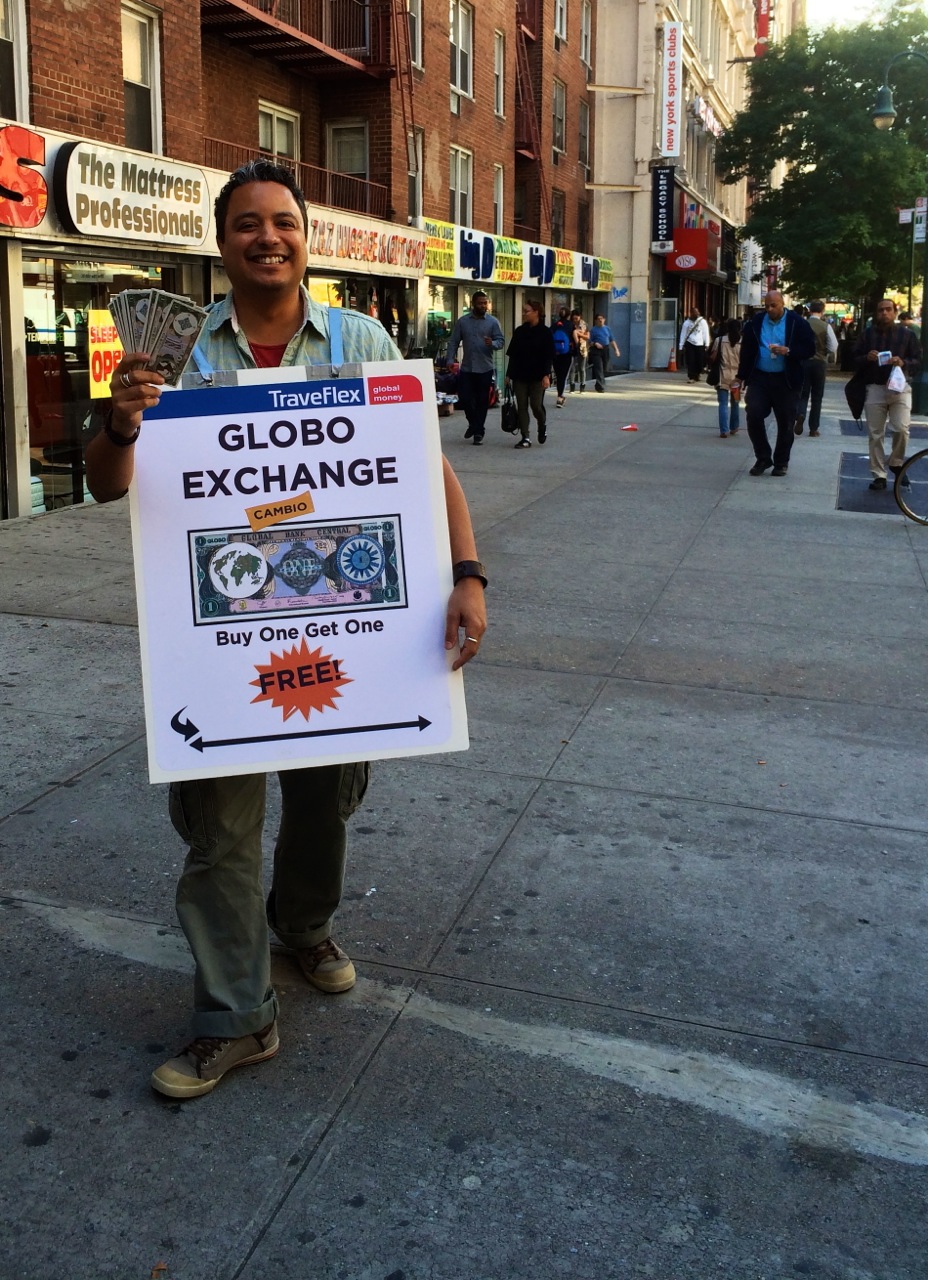
IMG_8897

Nicky Enright performing Globo Exchange.  Photo courtesy of the artist.

How has the experience of making work for AiOP changed or influenced your practice?  Has it added any elements or led to any changes in your method, technique, or medium?

To brave the wilds of 14th Street with an interactive performance results in just that, increased bravery. This is the flip side of the vulnerability one feels when approaching complete strangers to engage with them on an art project. Vulnerability is bravery, and they are good modes to explore for an artist.


Fourteenth street is comprised of many different “publics.” There are the shoppers at Union Square, the commuters, the residents, the shop owners and merchants… How did your work interact with these publics, and what were the outcomes? 
IMG_8902

Nicky Enright performing Globo Exchange.  Photo courtesy of the artist.

Ironically, I found that local New Yorkers were the most engaged and engaging public I encountered. I thought tourists would enjoy exchanging their foreign currencies for Globos, but I found many tourists to be on edge on 14th Street – suspicious and guarded instead of fun and freewheeling. Too bad, because NY is a much friendlier place than they think, but the friendliness resides just below the surface.


What advice do you have for artists who are making their first foray into working in the public realm?
IMG_8965

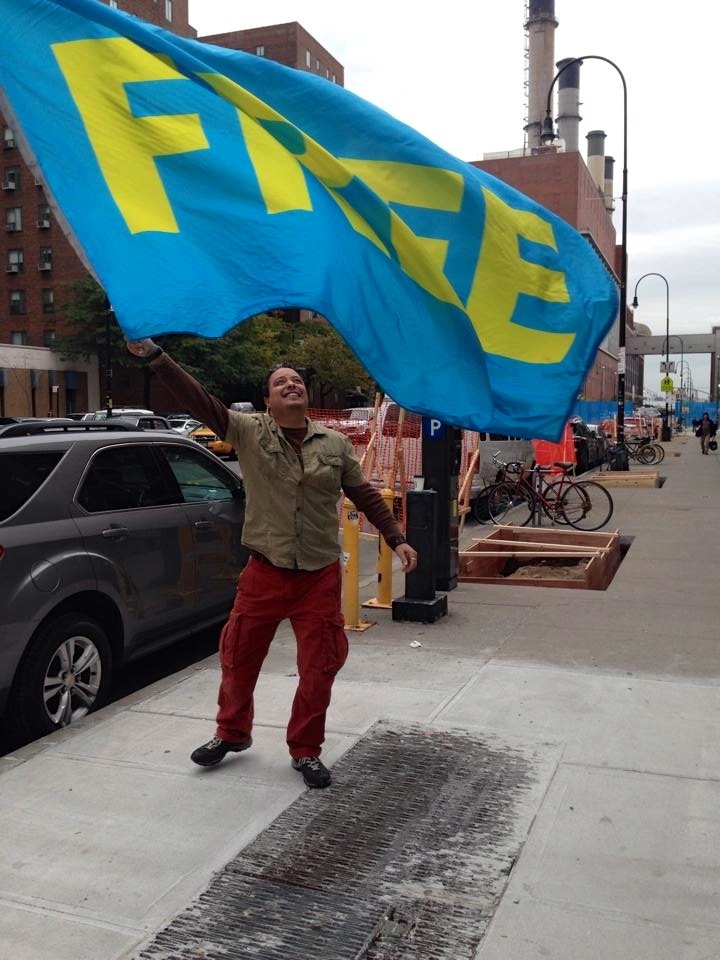
Nicky Enright.  Photo courtesy of the artist.

My advice is to look people in the eye and truly engage with them on a human level. It shouldn’t be about artist-to-public as much as person-to-person. It’s always beautiful to commune with fellow human beings, especially in an extraordinary way informed by creativity. Be brave, because you must, and be vulnerable, because it’s the same exact thing.
Public Art at Hunters Point: A Planning Visit

By Matthew Morowitz

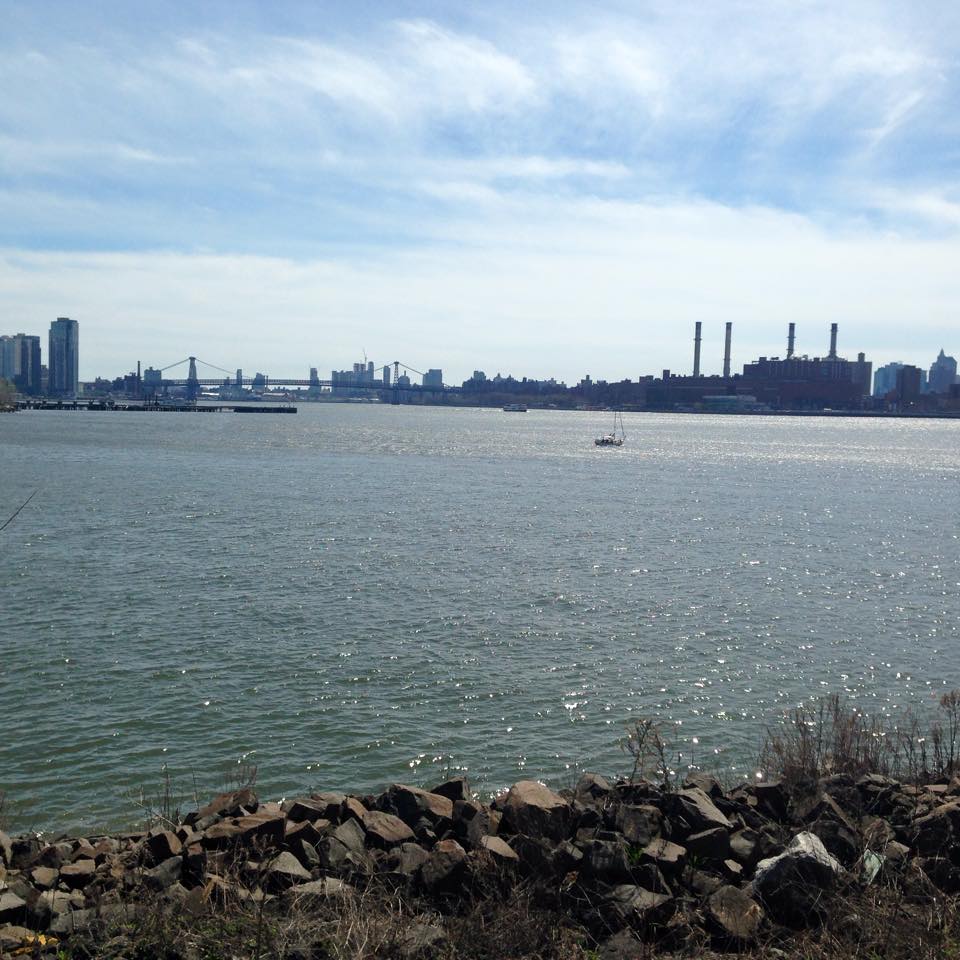
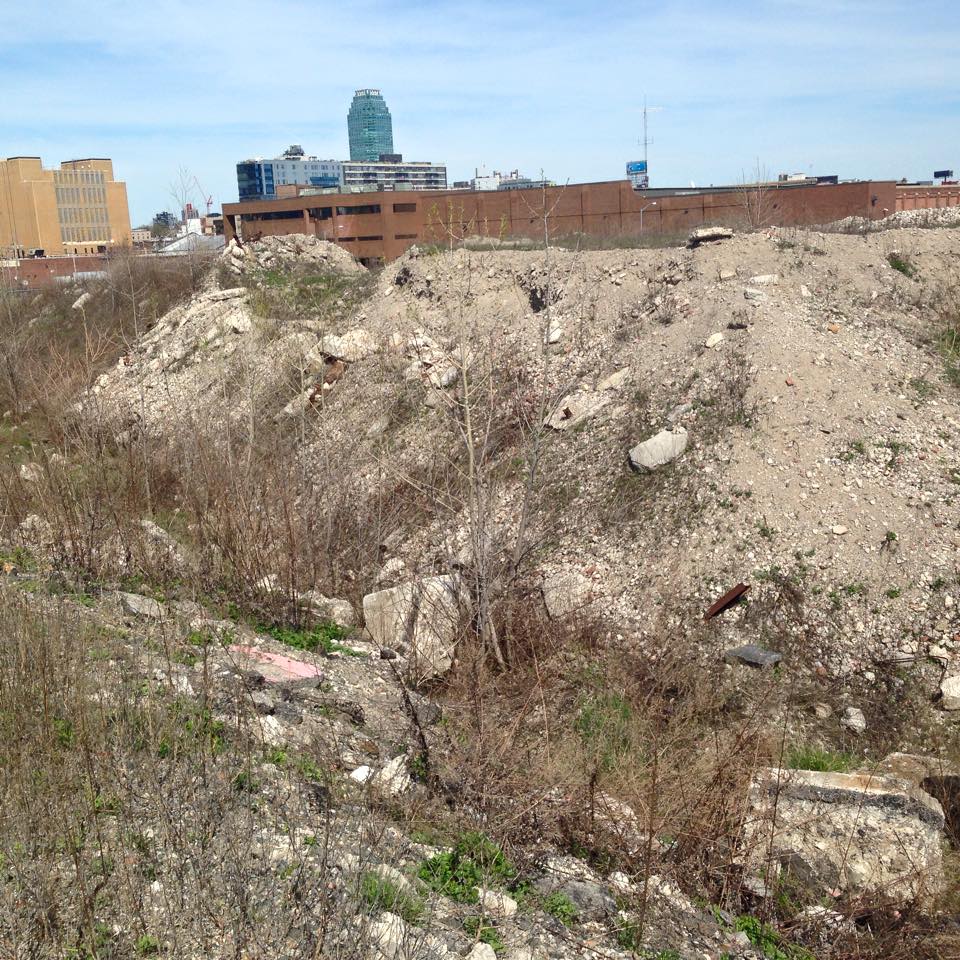
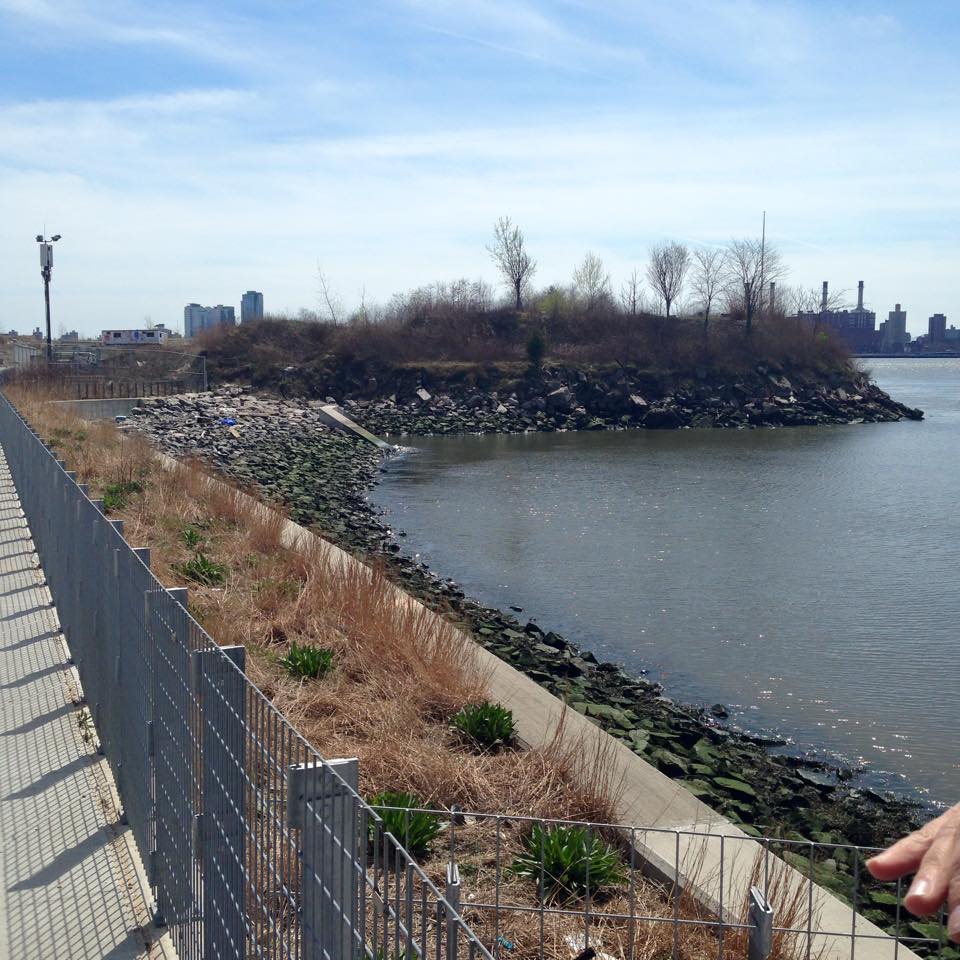
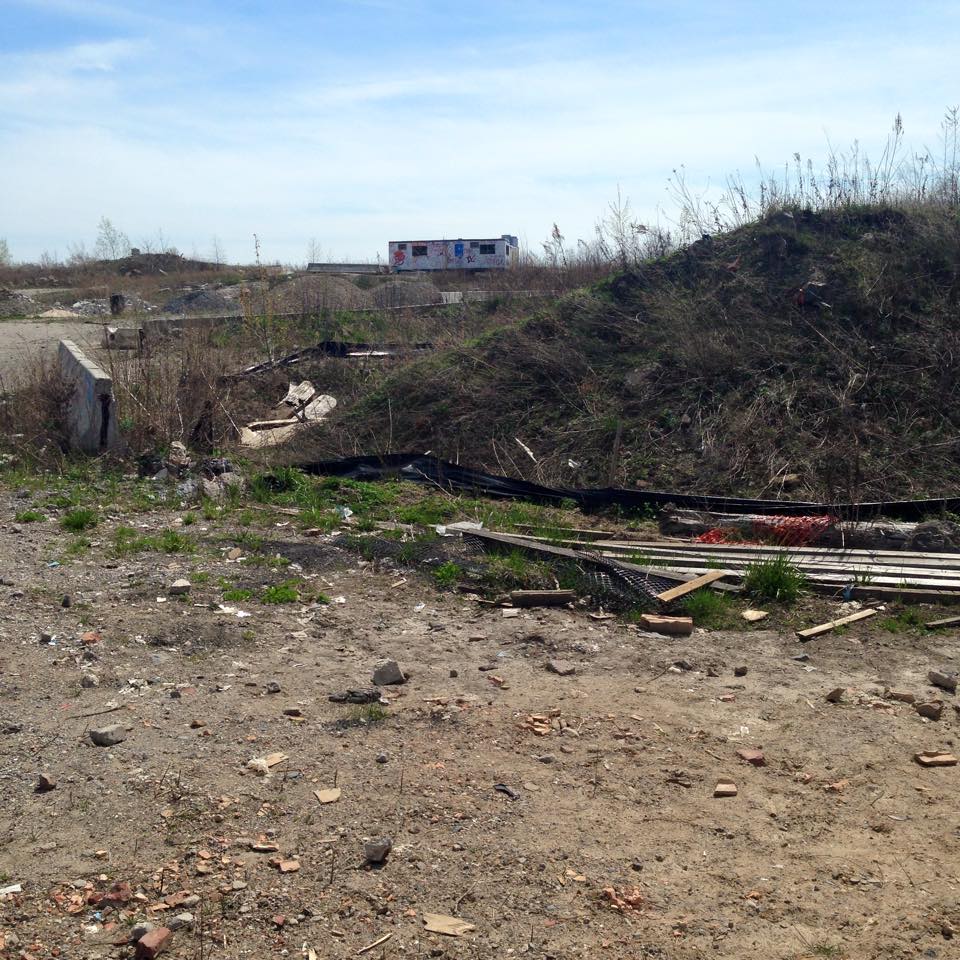
On April 19, 2015 I had the opportunity to join 6 artists and urbanists on a walk around an unclaimed area of Hunters Point in Long Island City. Situated at the tip of the point between a sculpted recreational park, the East River, and Newtown Creek, this is one of the last areas of wild overgrowth in NYC. This site visit was the first as part of the planning stages for a potential public art project to be held on the site. As the NYCEDC has plans to begin construction of housing on the site this summer, artist Catherine Grau is working to obtain permission from them to stage installations and performances in the area before it becomes another continuation of the city landscape.

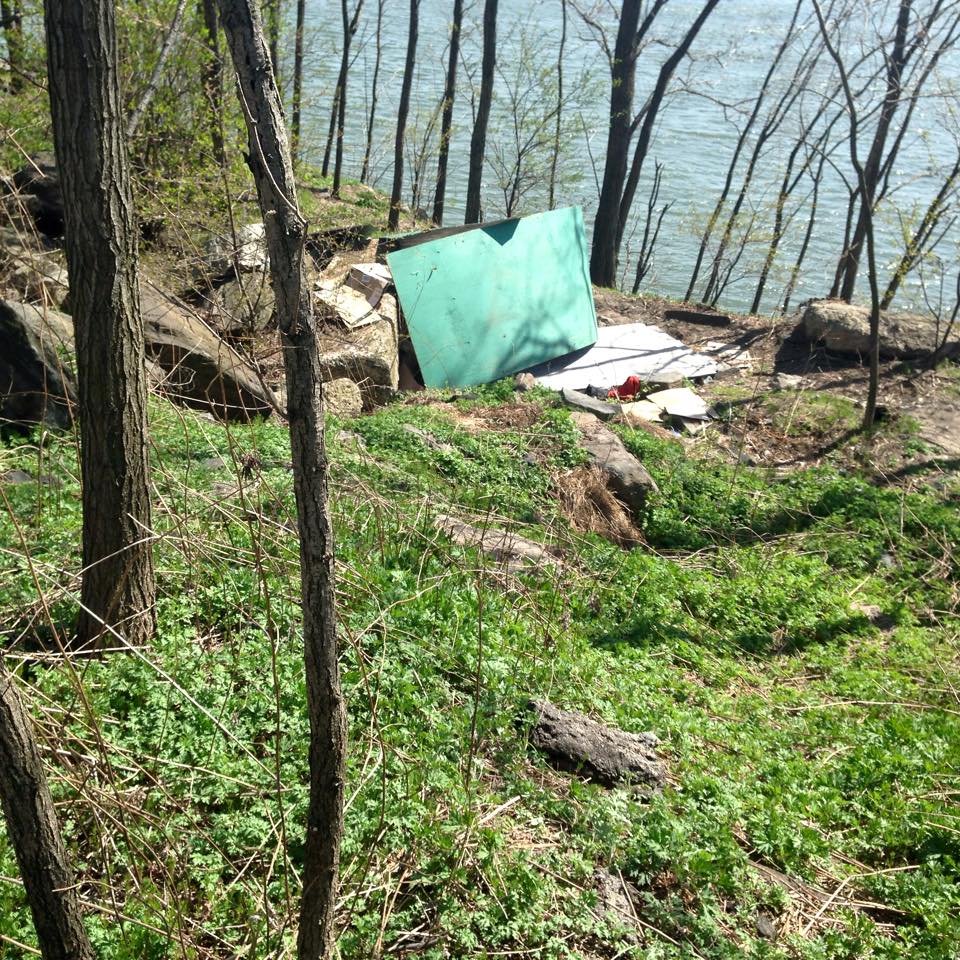
The site itself, while overgrown, is not so much a reflection of the NYC before the city but a rare slice of natural and non-manicured beauty that also reflects the many different pieces of the city. It is strewn with objects and dilapidated constructs, from bridges to boat anchors and even pieces some historians think were part of the old Penn Station. Walking around is both like taking a pilgrimage through an accidental museum (if you know where to look), as well as an escape from the order and monliths of the city.

Included below are some images from that day; the area itself is fenced off but there are ways around and residents of LIC mostly use the site for walking their dogs.   Also, be sure to read this article by Nathan Kensinger, which gives a brief history on the site and the development plans that are slated for it. Anyone who is interested in learning more about Catherine Grau’s proposed project can contact her at catherine.grau@googlemail.com.

11263023_10153364077301789_8912099932806532766_n

Site as seen from outside the fence.

11143714_10153364077381789_9128567020987178758_n

Site from inside the fence.

1610941_10153364077326789_4876349548695227562_n

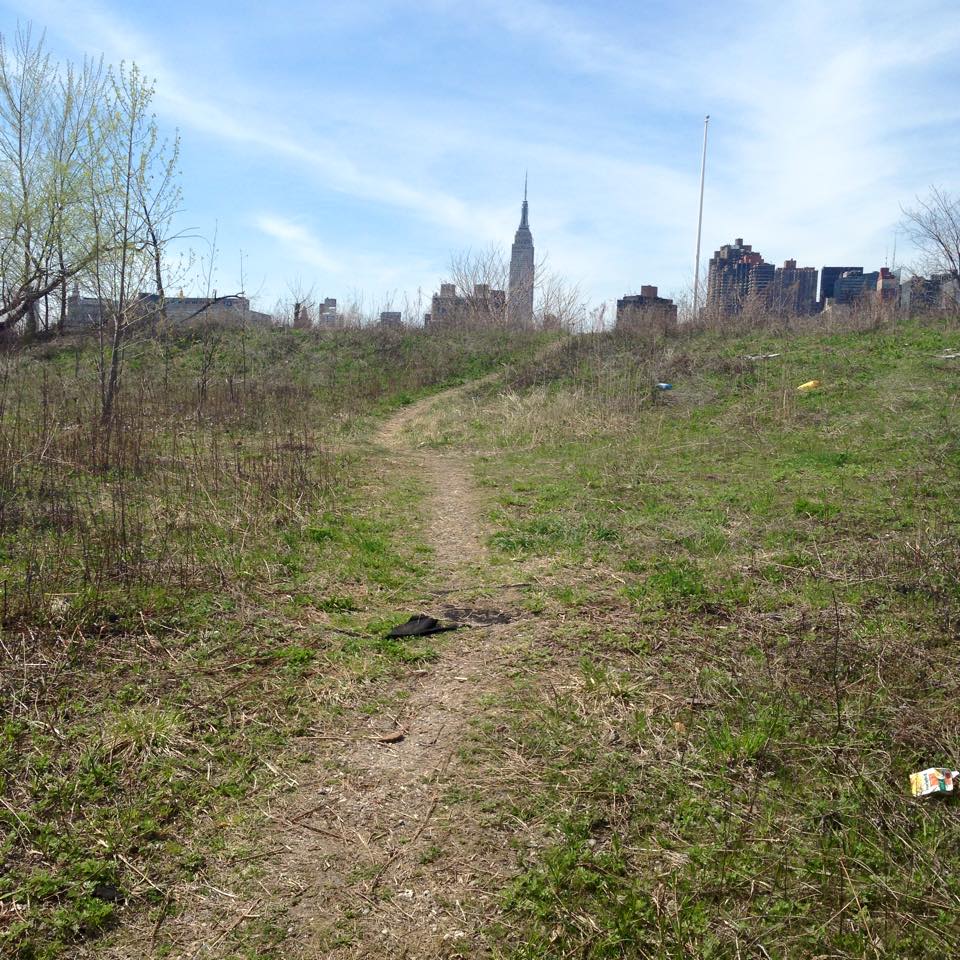
Hill that overlooks the East River and Manhattan.

11329774_10153364077026789_8671699328575464483_n

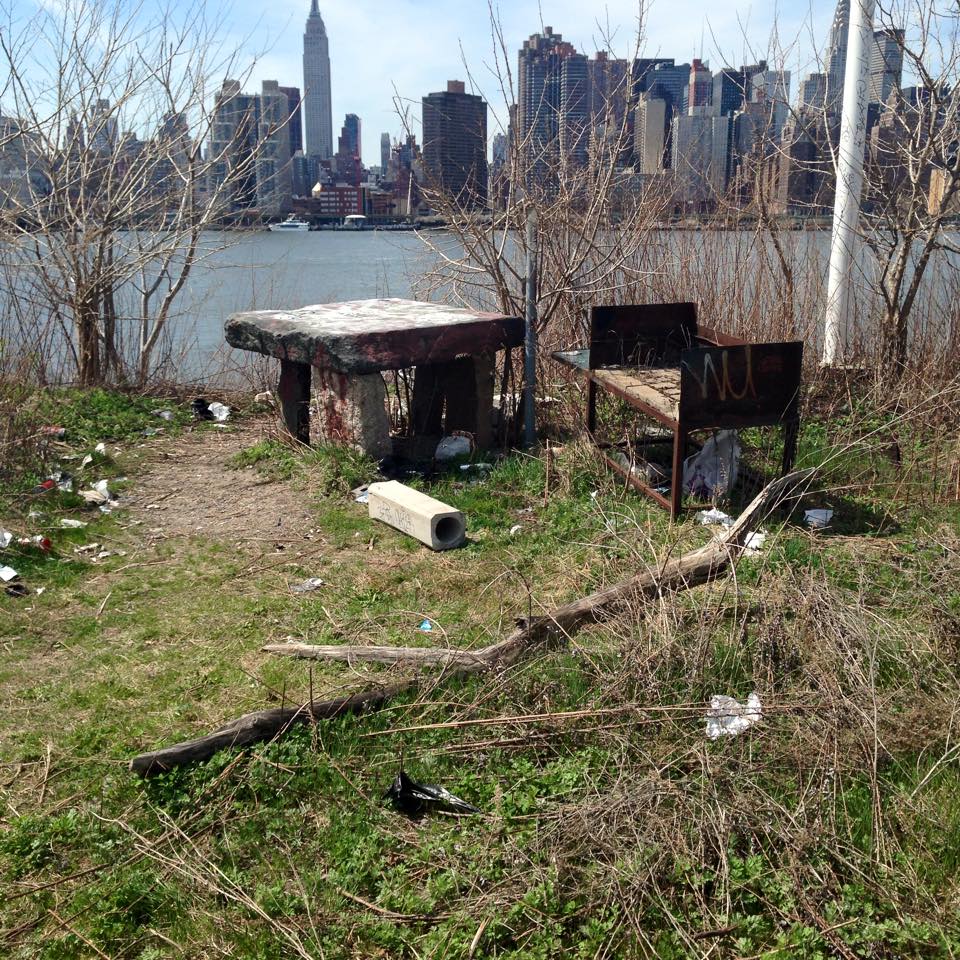
Stone and metal “furniture” and a view of Manhattan.

10687132_10153364076876789_5558430401544147358_n

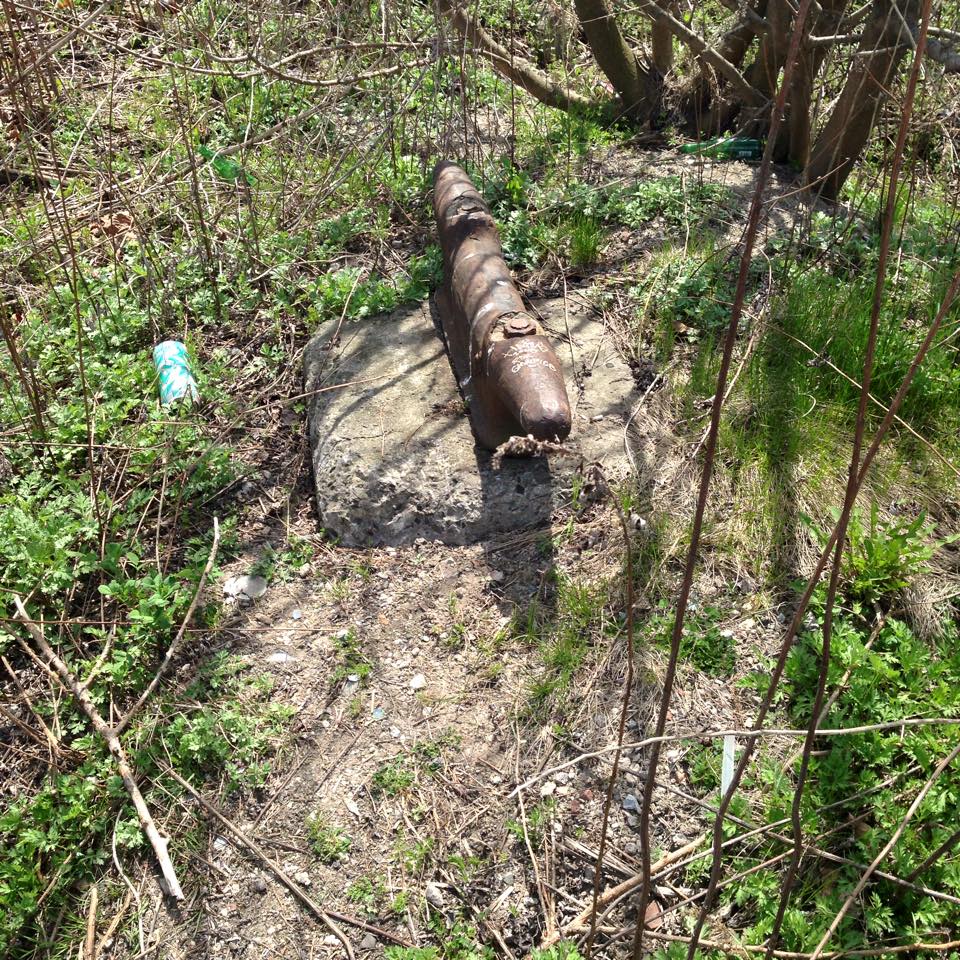
Old ship anchor, most likely not an original part of the site but dumped there.

11231141_10153364076691789_8299916317210892950_n

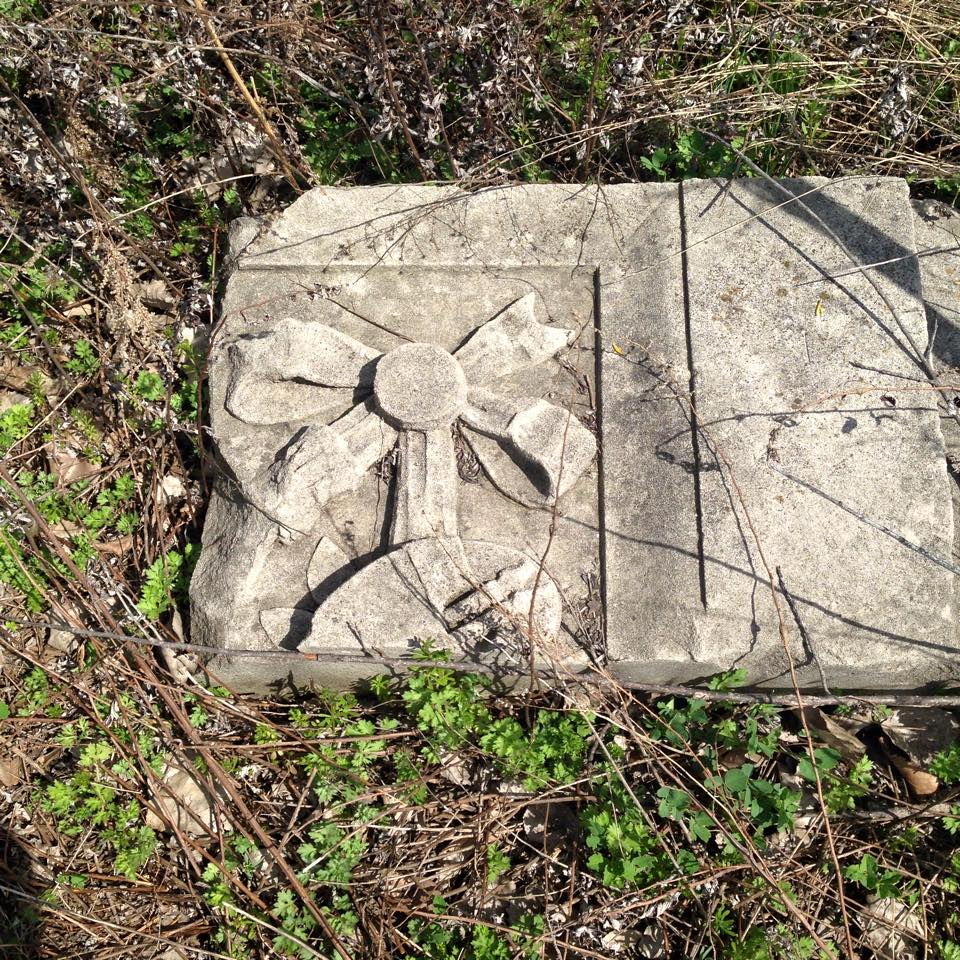
Carved stone that historians believe was once part of the old Penn Station.

1517941_10153364076631789_5953381442573674352_n

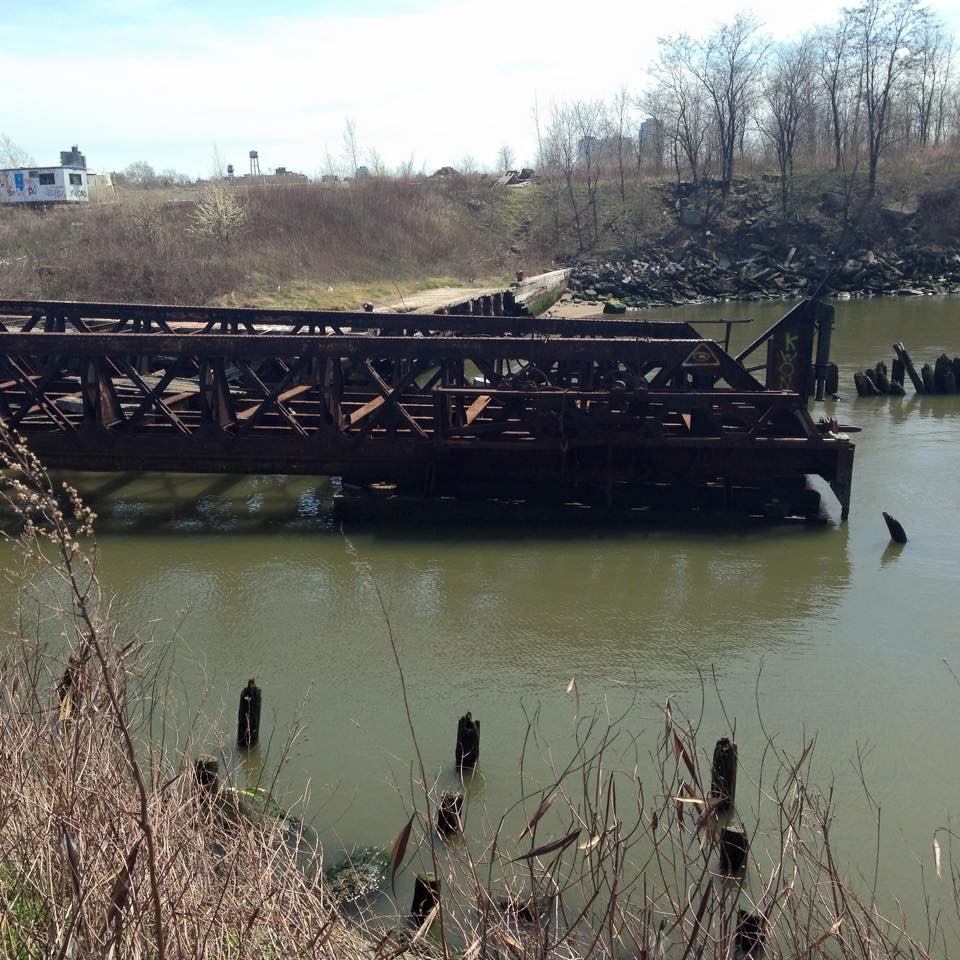
Old Bridge.

11231912_10153364076416789_3145078773418495426_n

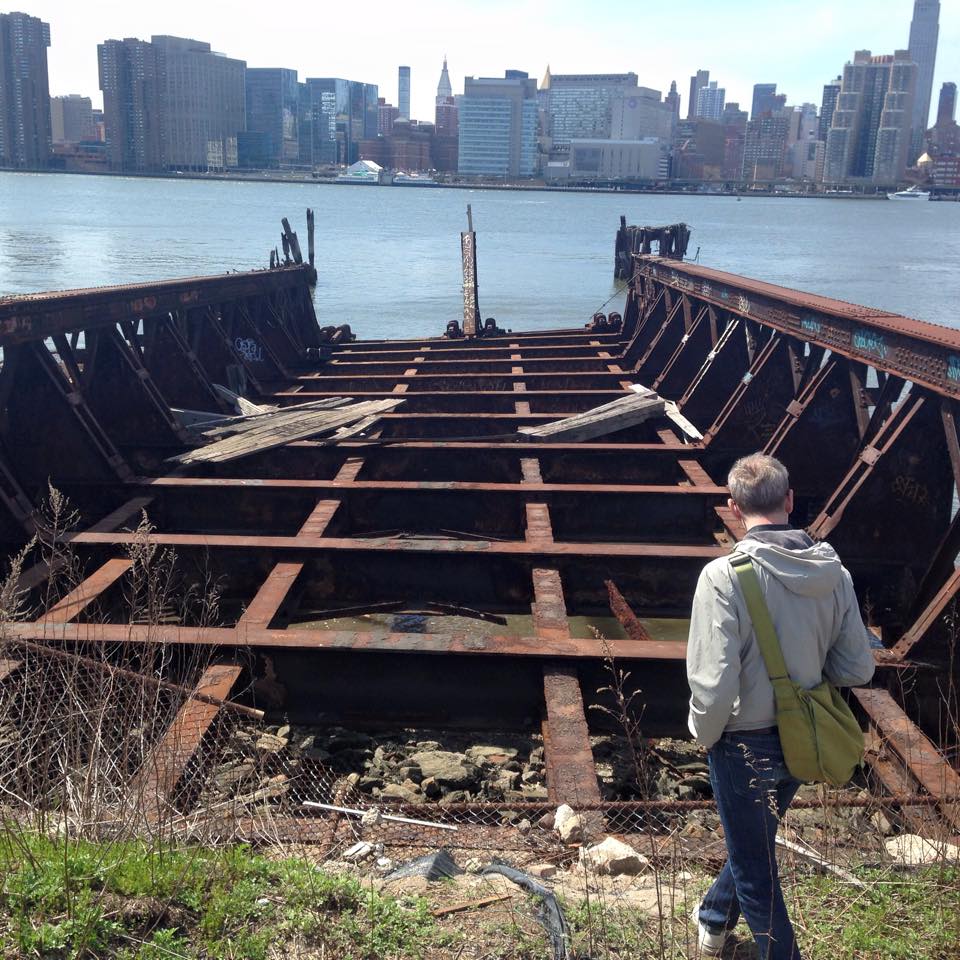
View down old bridge.

10559671_10153364076331789_4877829351261030421_n

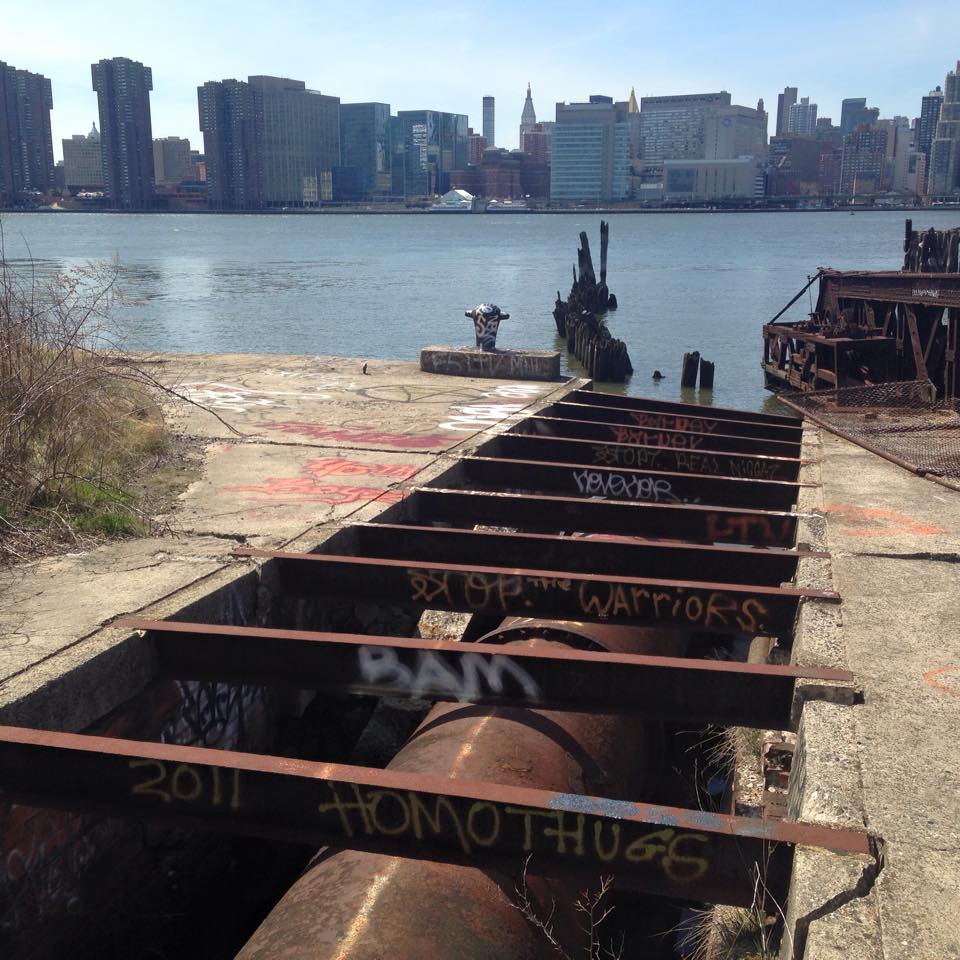
Drainage pipe.

11215174_10153364075036789_1649277276764061073_n

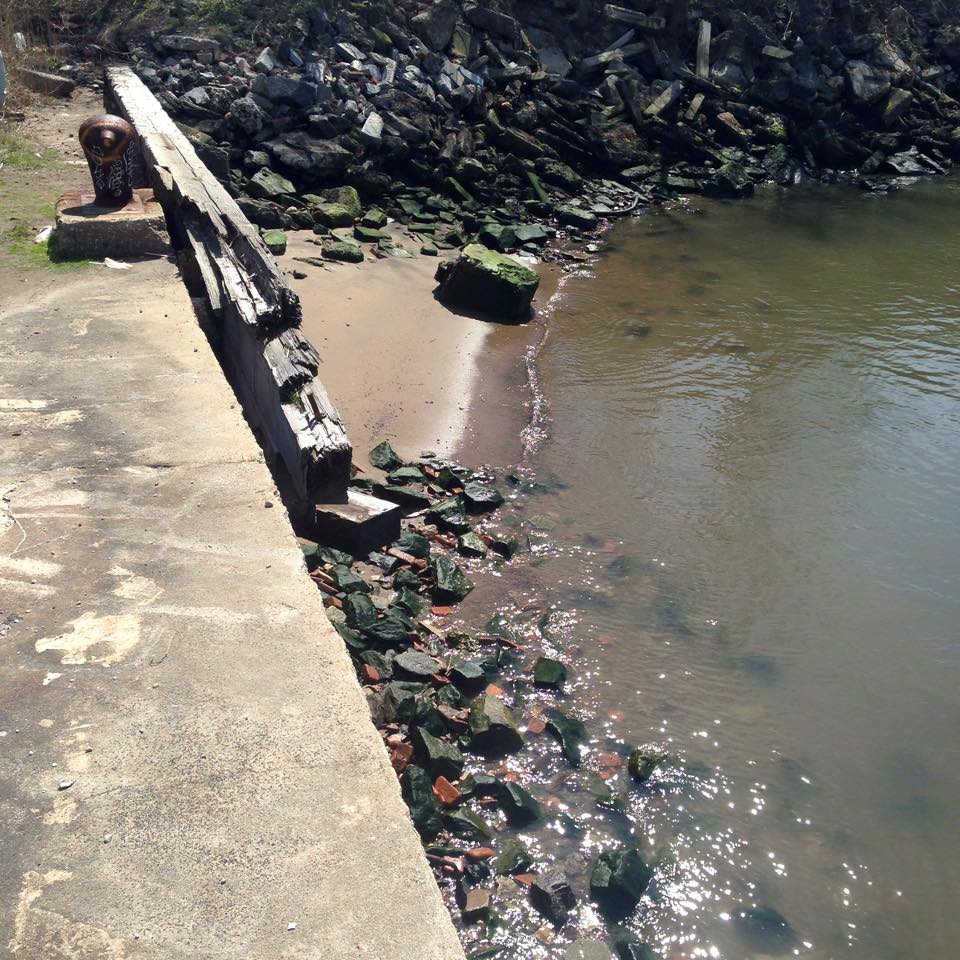
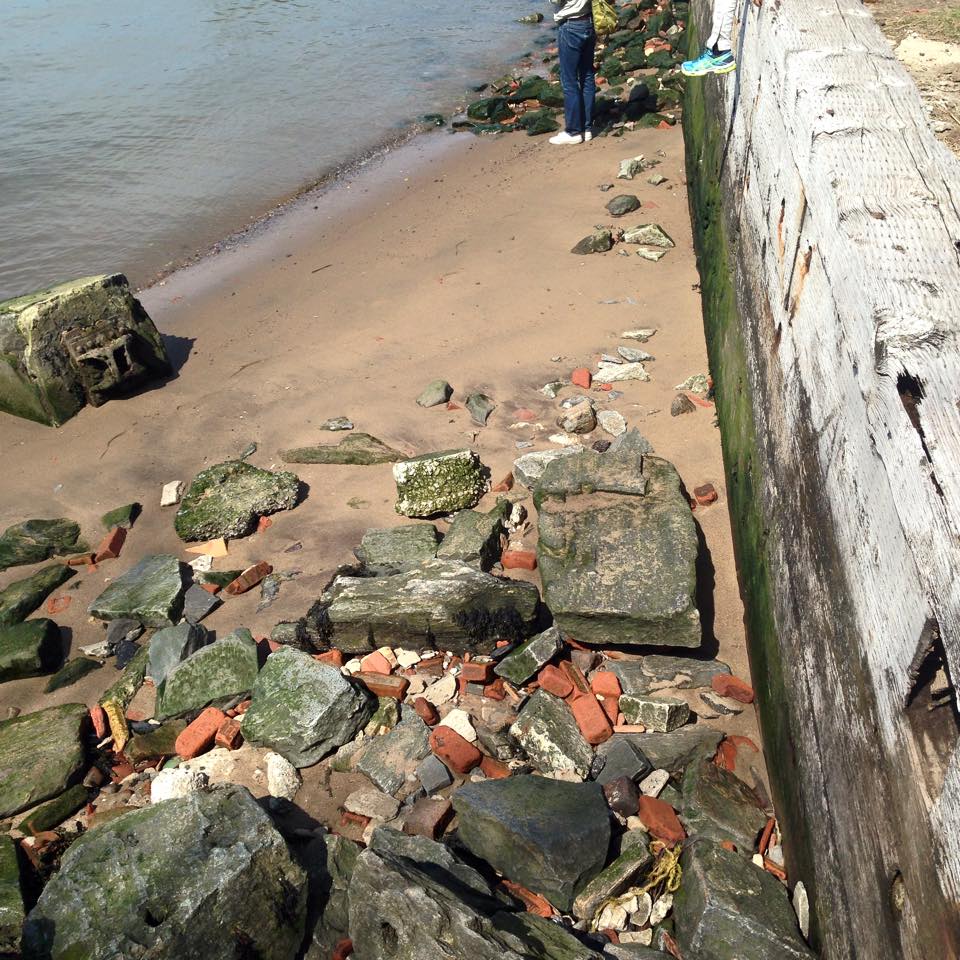
“The beach” at low tide.

11252173_10153364076186789_6607162089092796167_n

“The beach,” seen from the other side.

10599461_10153364074836789_8165093042813021666_n

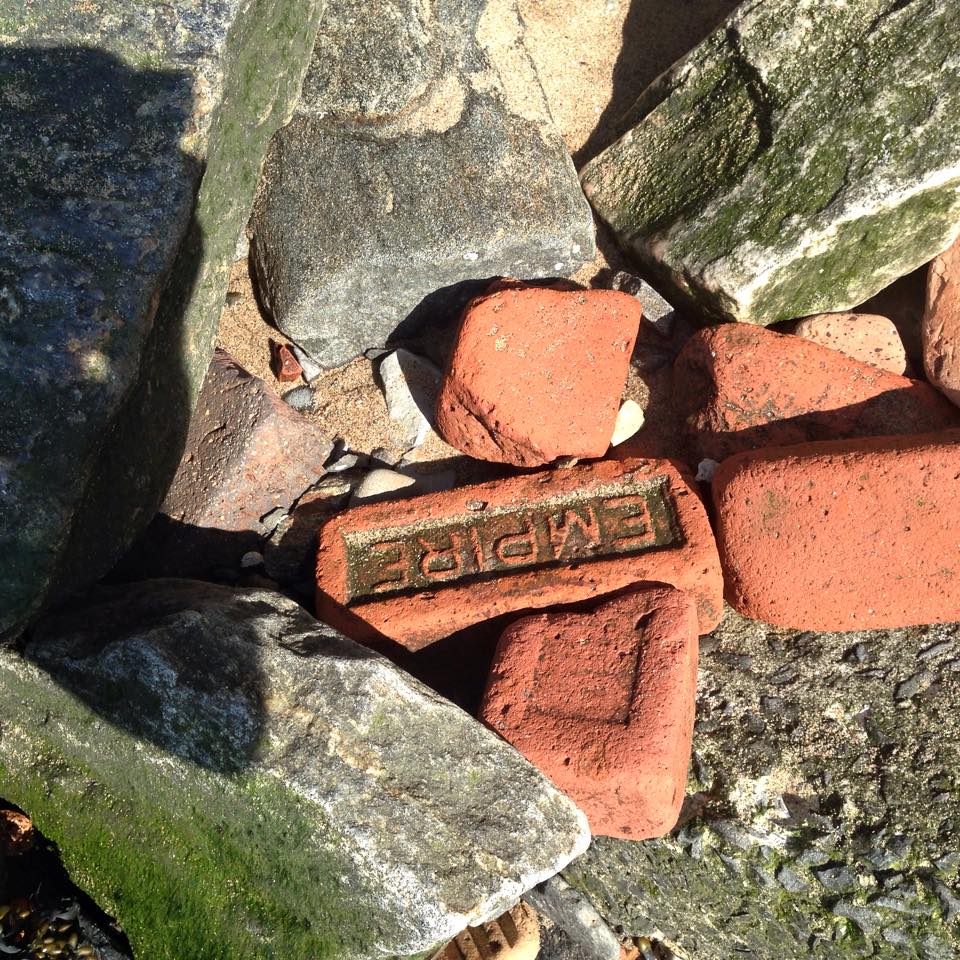
Old brick with identifying information on “the beach.”

10522449_10153364074521789_5990274329600216398_n

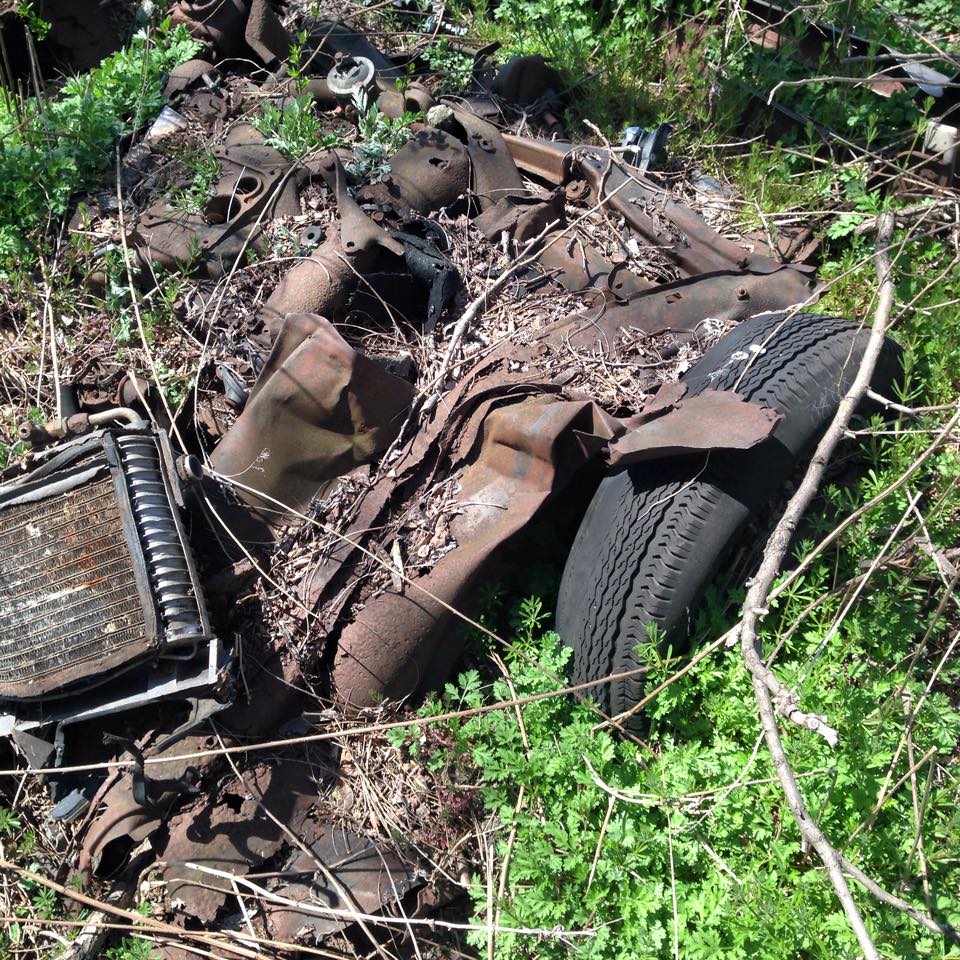
Old car.

11295574_10153364074616789_2525695886625173186_n

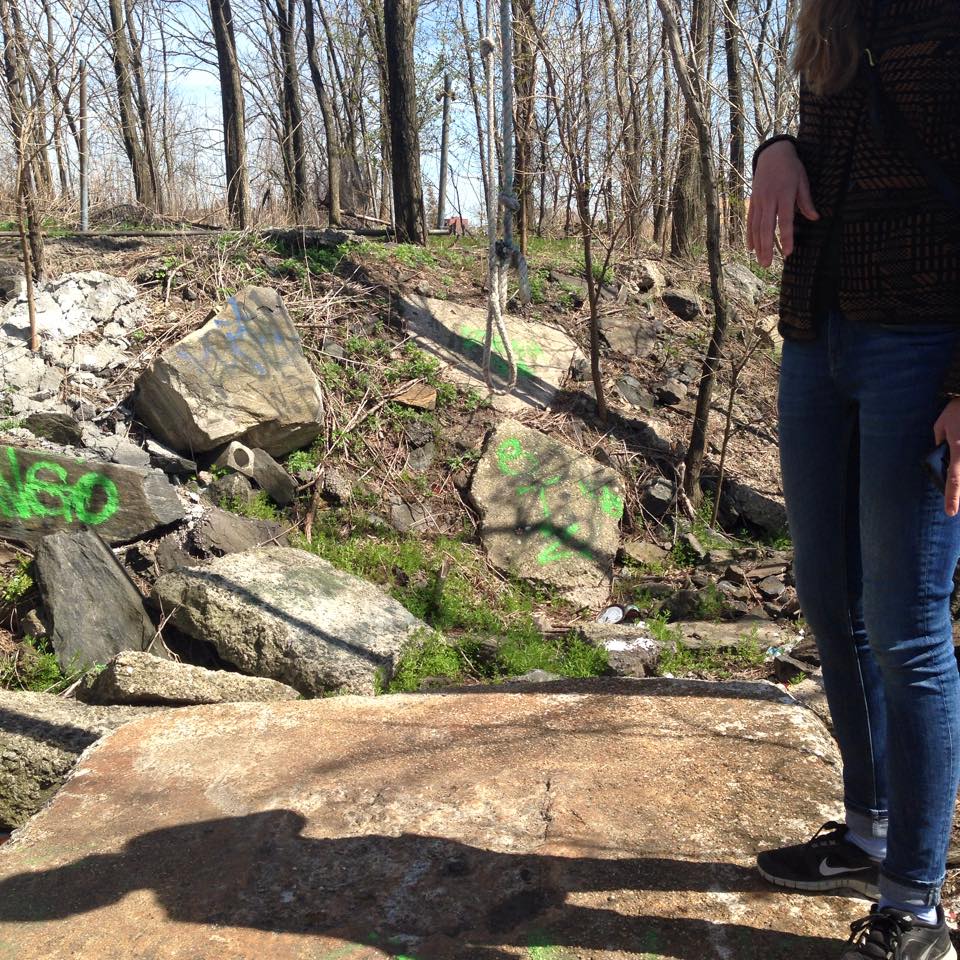
Stone platform with “swinging” rope.

15596_10153364074336789_3360270254245161794_n

Makeshift living structure.

10996518_10153364074311789_3722022984773776395_n

View of Manhattan and part of Brooklyn from where the Newtown Creek meets the East River.

11295761_10153364074121789_1303002082345681922_n

“The valley.”