Presenting visual and performance art in unexpected public spaces.

AiOP 2014 FREE Looking Back: Katya Grokhovsky “Slow Dance”

Under the theme of FREE, Art in Odd Places (AiOP) celebrated their 10th year engaging with works that celebrated ideas of openness, autonomy, and independence. As we prepare for AiOP 2015: RECALL and our exciting 11th year, we’re taking time to look back at some of the works that embodied last year’s theme and see what the artists learned by producing their pieces, and how working on 14th Street impacted their practices.
 slowdance2

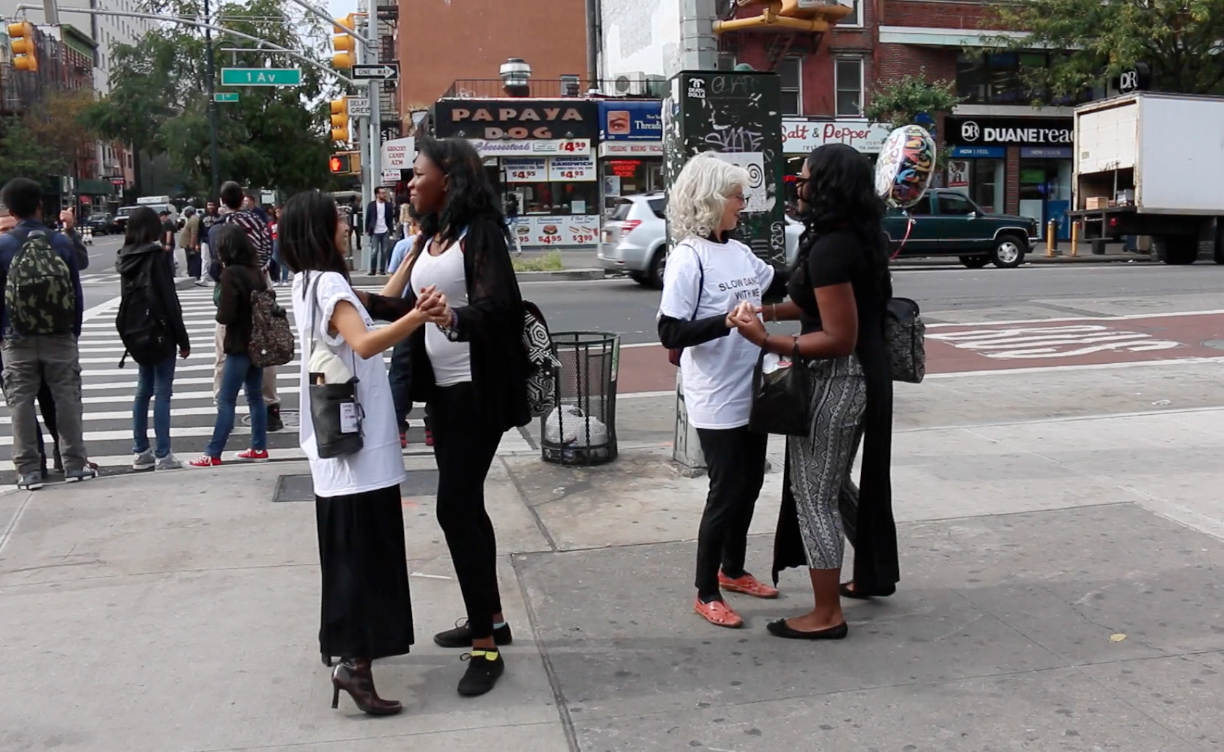
Katya Grokhovsky, Slow Dance, 2014, images Tuo Wang, courtesy the artist


Can you describe your contribution to AiOP: FREE?

 project title

Slow Dance

Katya Grokhovsky, AiOP FREE! 2014

project description

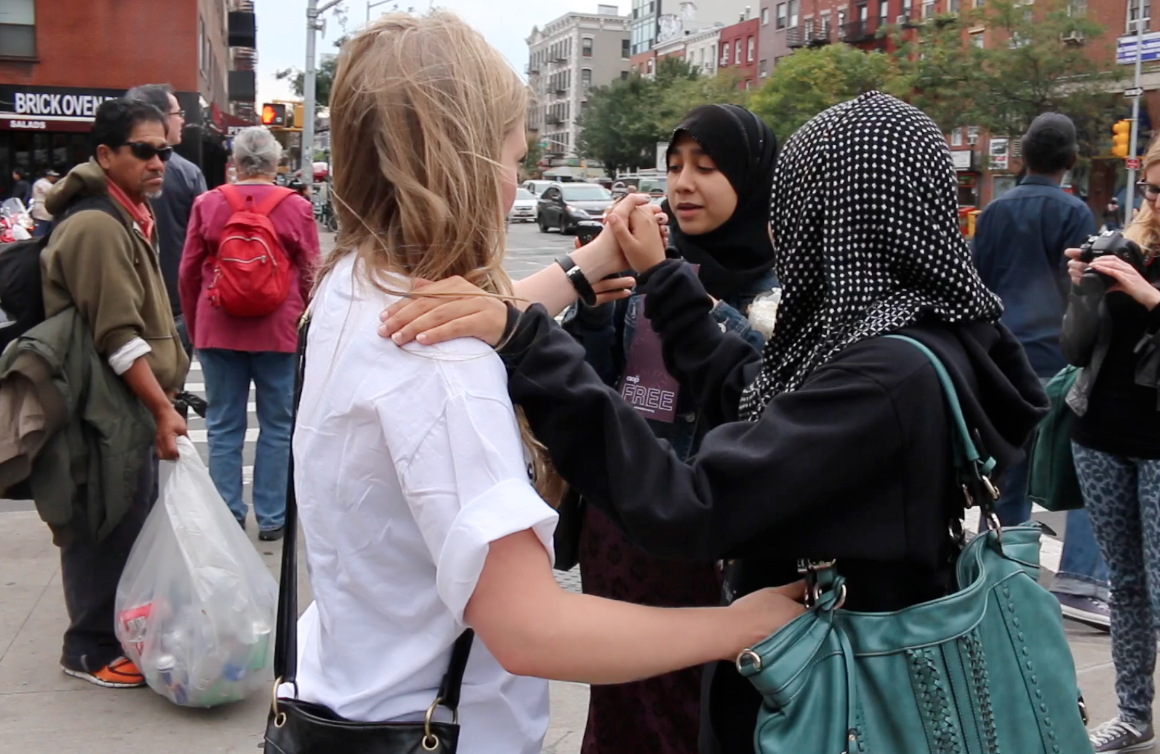
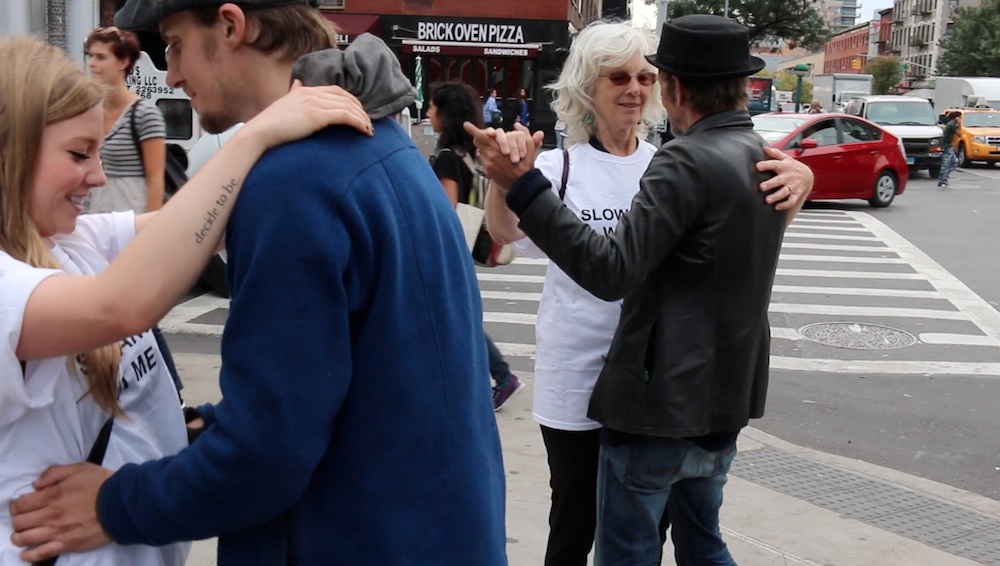
My contribution to AIOP: FREE involved a durational participatory performance, Slow Dance, which took place daily during the festival, in various locations along 14th street. In this performance I, along with several performers, asked passerby to slow dance, accompanied only by the conversation and street noise.


Working in public space, one is often forced to deal with the unexpected. What surprising turns did your work take during AiOP: FREE? 

I was particularly surprised by the somewhat enthusiastic response of the street audience and their willingness to engage with the work in some locations, as well as the obvious dis-interest in others. The geography of the work and the city itself came into play immediately and often became the topic of the slow dancing conversations.

slowdance1

Katya Grokhovsky, Slow Dance, 2014, images Tuo Wang, courtesy the artist

How has the experience of making work for AiOP changed or influenced your practice?  Has it added any elements or led to any changes in your method, technique, or medium?

I enlisted other performers to help me facilitate the work for the first time through an open call.  I enjoyed this process and have kept incorporating performers into some of my performance work ever since. Working with new facilitators, besides myself, has dramatically expanded my own view of the Slow Dance project and I have decided to interpret the collected oral histories post-performance into a new work.


Fourteenth Street is comprised of many different “publics.” There are the shoppers at Union Square, the commuters, the residents, the shop owners and merchants… How did your work interact with these publics, and what were the outcomes?
 slowdance5

Katya Grokhovsky, Slow Dance, 2014, images Tuo Wang, courtesy the artist

I changed locations each day of the festival and this migration had an inevitable impact on the way the performance proceeded. For example, East Village passerby were highly interactive, entertaining and active participants, with various stories and narratives revealed, as opposed to unsurprisingly unresponsive speedy audiences of the Meatpacking District. The outcomes in general were also dependent on the time of day the performances took place, indicating the flow of the city’s hectic everyday life cycle, economy of time and placement, as well as the weather conditions. Overall, we engaged with a vast sample of NYC’s publics and collected several anecdotes. We danced with dogs, babies, were taught new moves and choreography, learned about personal tragedies and break ups, as well as histories of the neighborhoods.


What advice do you have for artists who are making their first foray into working in the public realm?

Be open minded, be alert and attentive, especially to the conditions around you, be flexible, change location, adapt to weather, basically think fast and have fun!
slowdance4

Katya Grokhovsky, Slow Dance, 2014, images Tuo Wang, courtesy the artist
AiOP 2014 FREE Looking Back: Ienke Kastelein “Have a seat on the sidewalk / walking with chairs”

Under the theme of FREE, Art in Odd Places (AiOP) celebrated their 10th year engaging with works that celebrated ideas of openness, autonomy, and independence. As we prepare for AiOP 2015: RECALL and our exciting 11th year, we’re taking time to look back at some of the works that embodied last year’s theme and see what the artists learned by producing their pieces, and how working on 14th Street impacted their practices.

 P1050571

Photo courtesy of the artist.

Can you describe your contribution to AiOP: FREE?

project title

Have a seat on the sidewalk / walking with chairs

Ienke Kastelein, AiOP FREE! 2014

project description

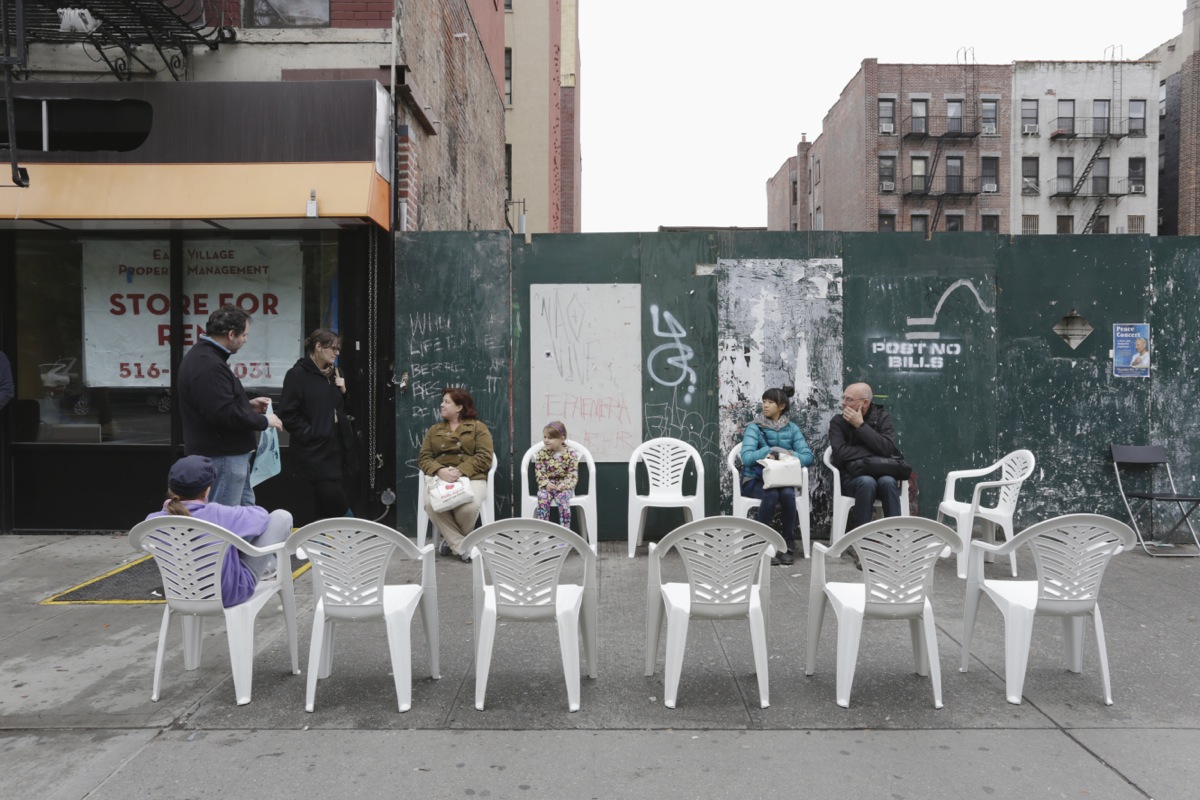
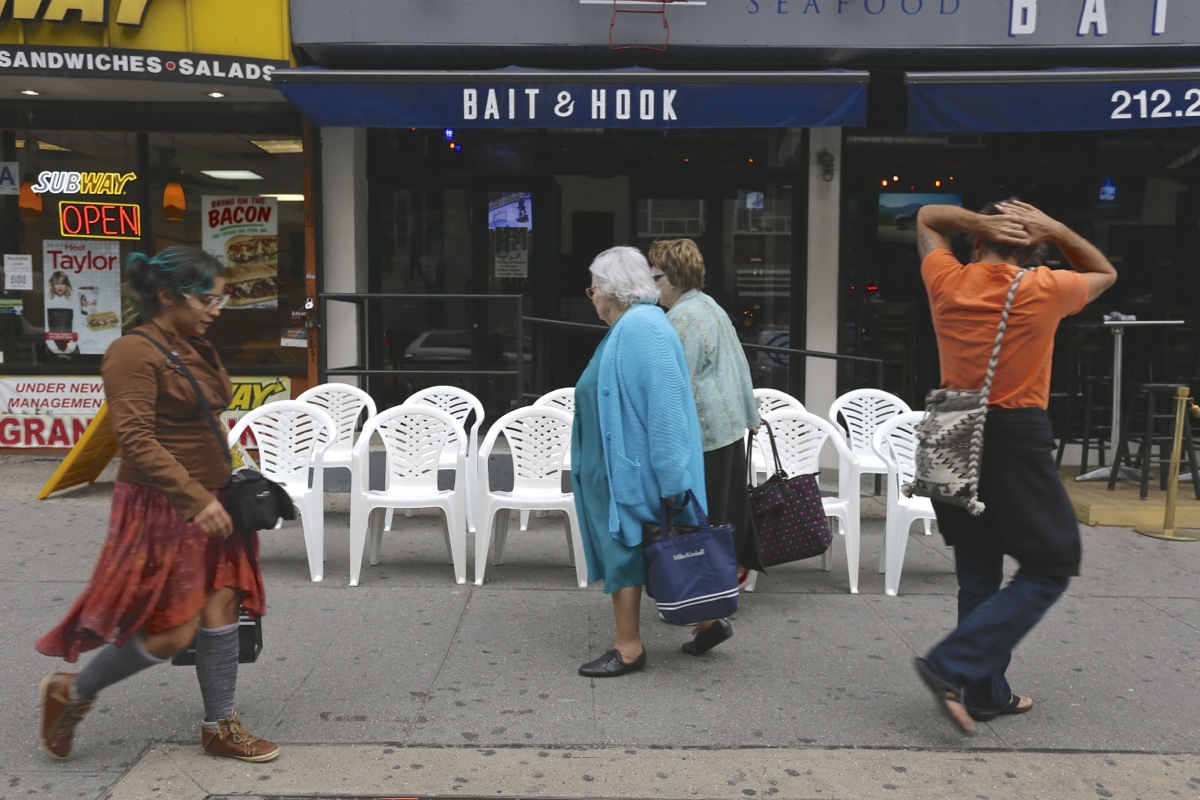
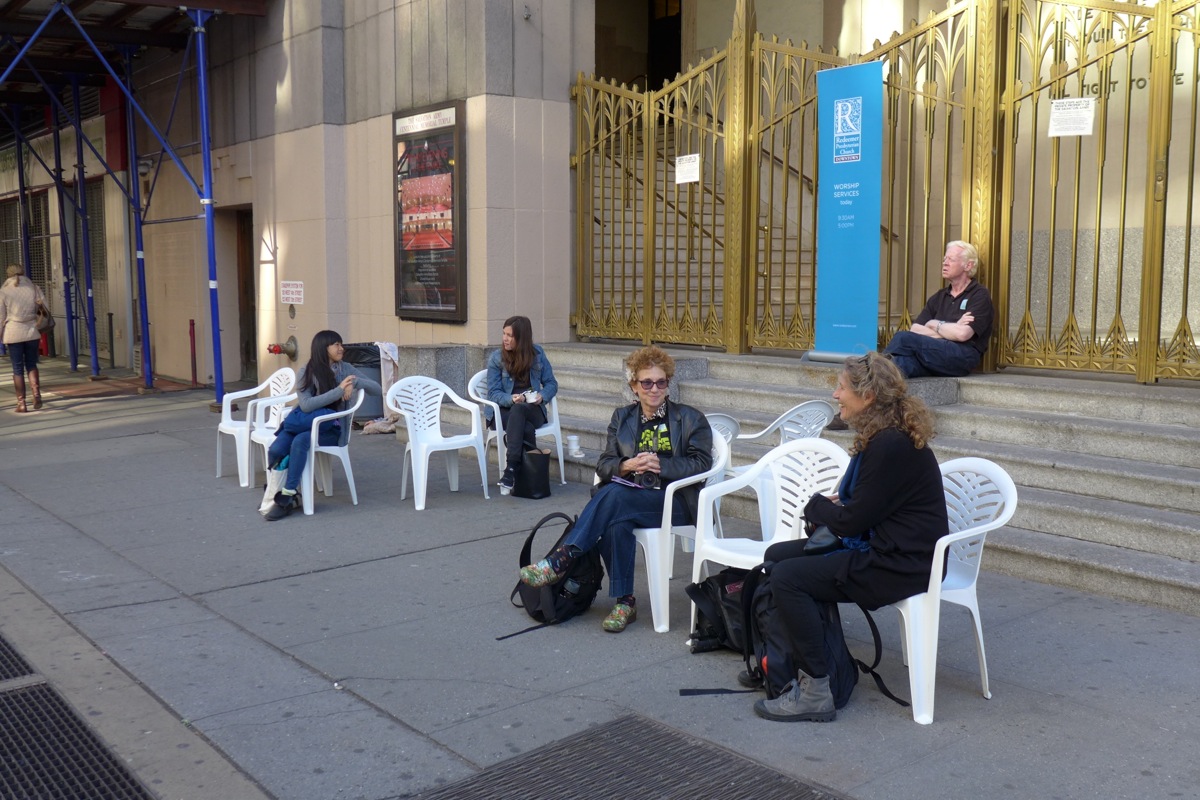
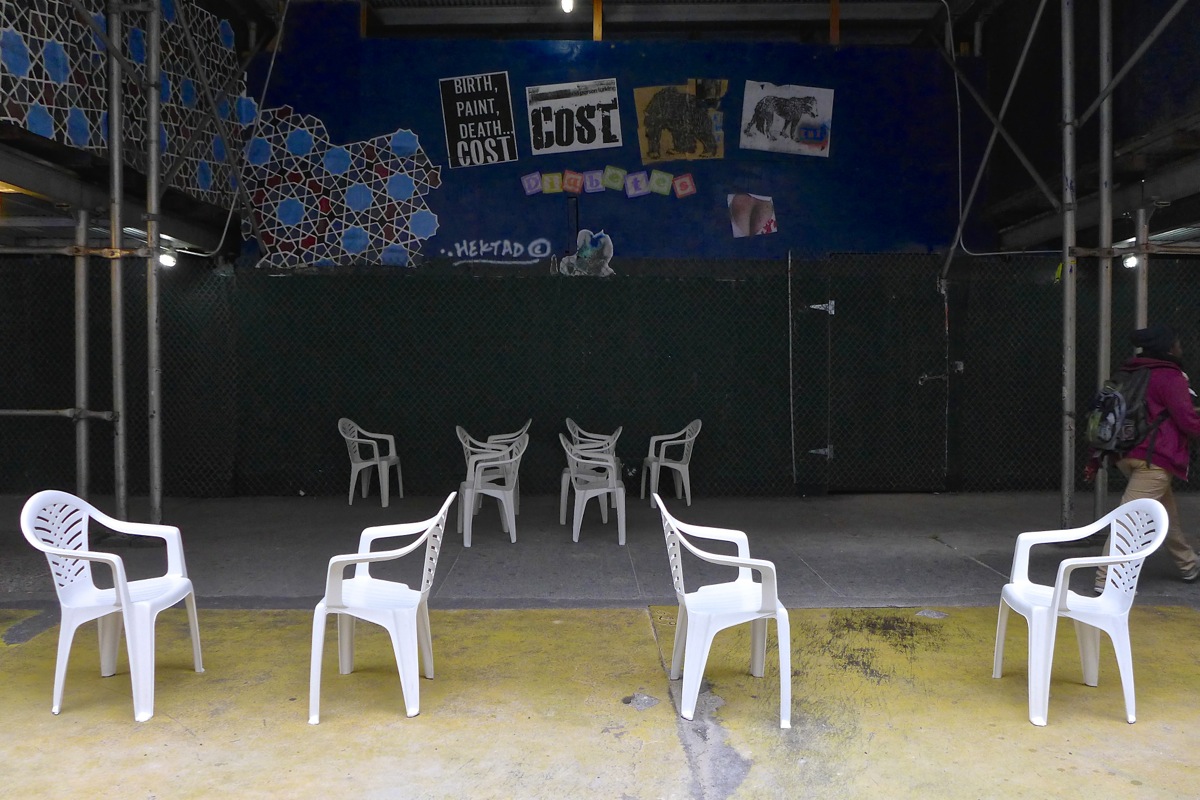
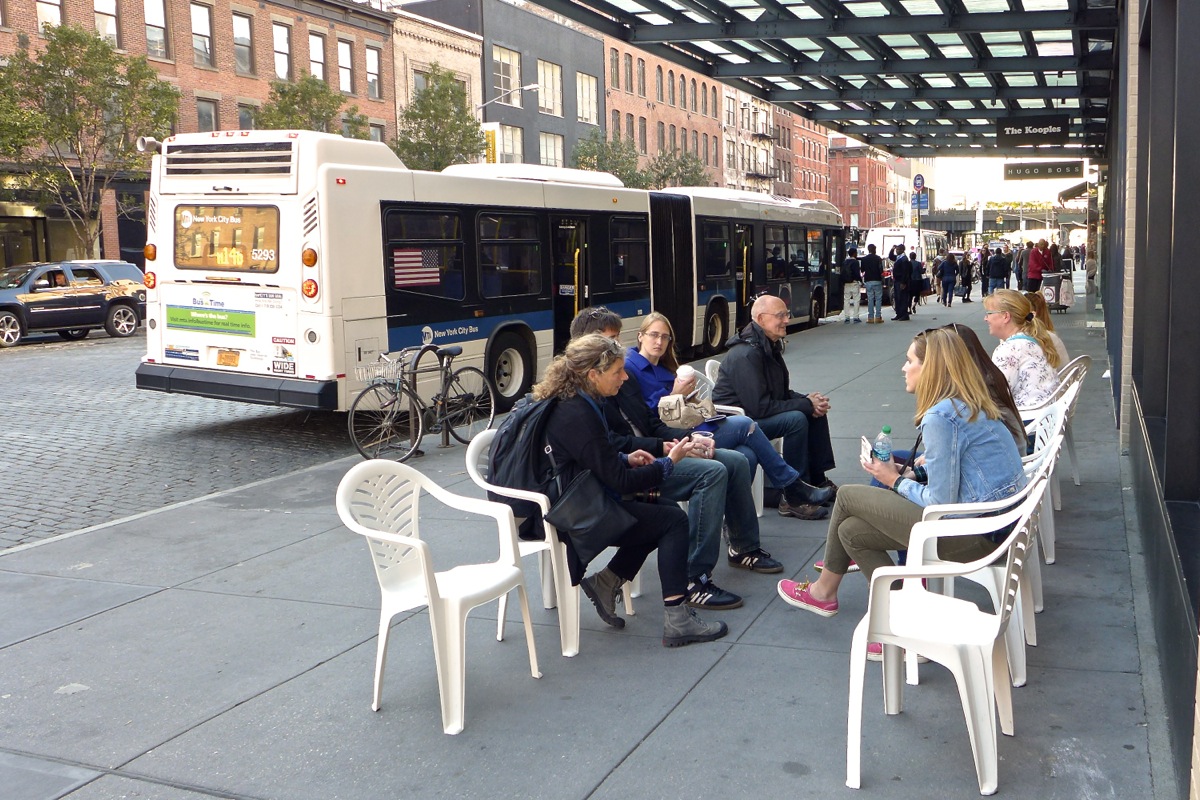
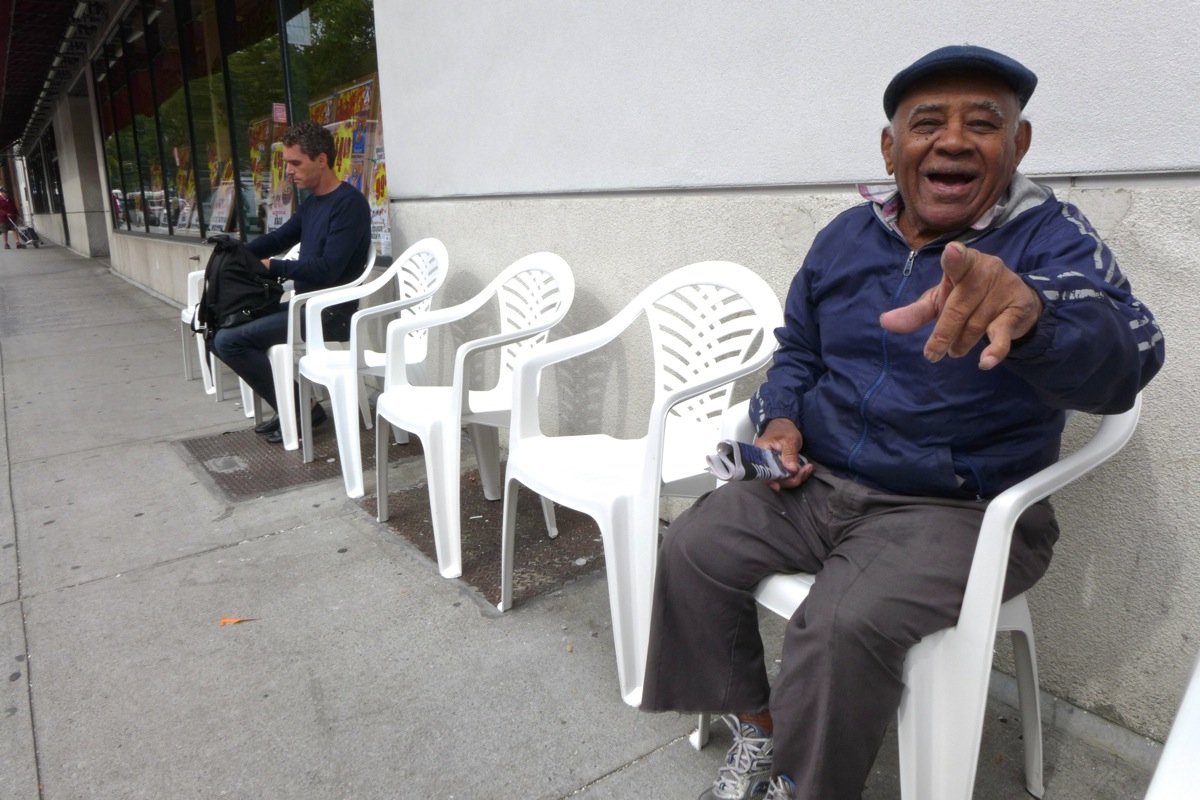
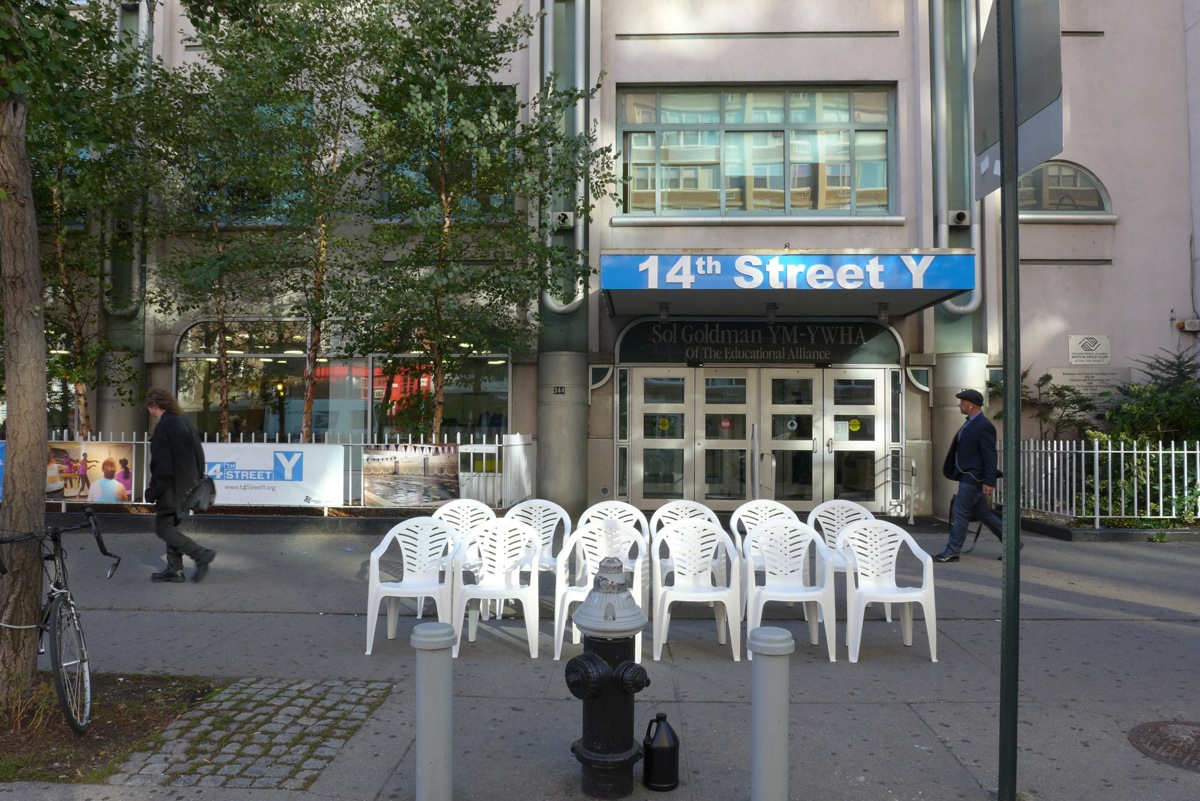
For this participatory performance on the sidewalk of 14th street, 12 white plastic chairs are put together like a small community, allowing people to sit down.  During the performing time we moved the chairs up and down 14th street.

 _MG_2260

Photo courtesy of the artist.

looking back on the project

On Thursday we started at the corner of Avenue C on the north side of 14th Street and moved to Union Square; on Friday we started by crossing Union Square and continued all the way to the Highline. On Saturday we started on the Campos Plaza, on the Southside of the Street, and got as far as Union Square, then continued on the final day on the Southside and reached the Highline at the end of the afternoon.

We put the chairs in different spots and made a constellation depending on the situation. Sometimes it was orderly; sometimes we put them in more informal way. We went with the urban structure and the flow. Passersby responded in many different ways. Some of them just passed us with a smile, others ignored us completely, and many times people actually had a seat, watched the street, started conversations, and talked to one another. On occasion they found a new spot for the chair they had been sitting on. So we walked the chairs up and down the sidewalk.

_MG_1973

Photo courtesy of the artist.

We worked as a team: assistant Cindy Luong from NY and Hans van Lunteren joining as my personal assistants, and helped move the chairs, inviting people to sit down with us and taking photos. On occasion there were other assistants from AiOP as welI. It was very nice that Ed helped me purchase my chairs and made the connection with the place where I stored them for the night (14th Street Y).


Working in public space, one is often to forced to deal with the unexpected. What surprising turns did your work take during AiOP: FREE?

AiOP festival dag 4 P1020354

Photo courtesy of the artist.

I did not anticipate putting up the chairs as an informal audience to other projects that we encountered during our walk, which was surprisingly nice (for instance the sound piece by Jen Reimer & Max Stein and the Street Drawing by Kevin Townsend)


How has the experience of making work for AiOP changed or influenced your practice?  Has it added any elements or led to any changes in your method, technique, or medium?

Actually it was a kind of natural next step – and an amazing one – in a series of works, coming from an ongoing fascination for sitting and walking, that I have been working ever since 2004-5. Someone made the remark that I might have preferred to show my work in MOMA, but actually I could not imagine a better place for this particular work than 14th Street.

P1050848

Photo courtesy of the artist.

14th Street became the Studio, the Stage as well as a Museum. It was really embedded in 14th Street.


Fourteenth Street is comprised of many different “publics.” There are the shoppers at Union Square, the commuters, the residents, the shop owners and merchants… How did your work interact with these publics, and what were the outcomes? 

 P1060140

Photo courtesy of the artist.

As I mentioned before people responded in various ways. On Union Square and East of Union Square people seemed to be more open to actually have a seat and time to talk, and the closer we got to the Highline the more people took the chairs for granted. We did very well in front of the Apple Store though. It was part of the project to cover all these different parts of 14th Street. I consider places with little response as interesting as parts with a lot of response.


What advice do you have for artists who are making their first foray into working in the public realm?

Ask yourself what kind of connection you are trying to establish with the Street and the audiences in it. Embed your work in the context of the street. Ask yourself why it matters that you show or perform your work in this particular context. Make it part of your research and of the work.

P1020098

 Photo courtesy of the artist.

www.ienkekastelein.nl