Presenting visual and performance art in unexpected public spaces.

Free City Public Art Festival: Reclaim | Transform, May 3-5

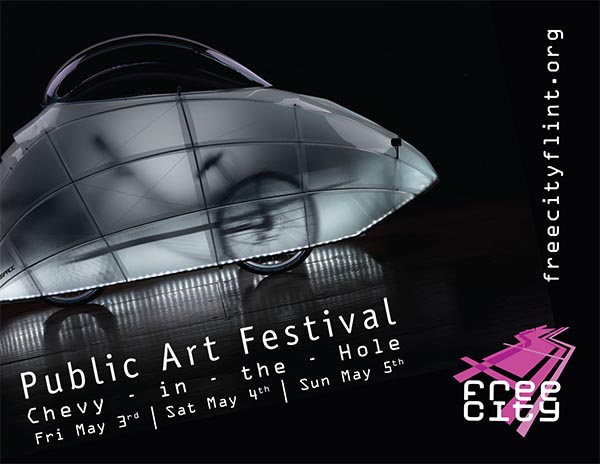
Free city poster.  Image courtesy of Jerome Chou.

The end of this week starts the Free City Public Art Festival: Reclaim | Transform in Flint, Michigan.  Recently, Stephen Zacks, the executive director of the Flint Public Art Project, contacted Art in Odd Places with this to say about the upcoming event:

From May 3-5, Flint Public Art Project is installing more than 80 works from around the country and the region to transform the site into an active part of the city. Dozens of local and regional artists are joined by visiting artists from Ann Arbor, Baltimore, Berlin, Belfast, Buffalo, Chicago, Cincinnati, Lansing, Lodz, Los Angeles, New York, and Pittsburgh to transform the former Chevrolet site into a spectacular landscape of light and sound.

This massive urban interventionist public art festival includes work by NY-based architecture office NAO (thenao.net), Boston-based architect Jae K. Kim (http://www.counter-design.com), an inflatable shelter by Ann Arbor-based artist Michael Flynn modeled after Anish Kapoor’s Cloud Gate in Chicago, an installation by Ann Arbor-based architect Catie Newell of Alibi Studio, a piece by NY-based architects Matthias Neumann and Natalia Roumelioti, an installation by Flint-based architect Freeman Greer, along with a wide range of art and performance works.

The festival will include many artists from the Detroit alternative space scene, including Jon Brumit, curator of public engagement at Museum of Contemporary Art Detroit; Hard Core Detroit, a Detroit break dance crew founded by Haleem Rasul specializing in a Detroit style of footwork known as the Jit; The Hinterlands, a Detroit-based company dedicated to exploring the art of performance through ecstatic play and explosive training; Spaceband Detroit, which uses a variety of homemade, toy, percussion, wind and electronic instruments; Maya Stovall, founder of Finite Studios, an art space/collective in Detroit’s McDougall Hunt neighborhood housed in a re-purposed bank; and Tzarinas of the Plane, a Detroit-based performance group specializing in dead operas, visual extravaganzas, dream walking, compulsive exaggerations and primal reenactments.

The project is one of dozens of programs Flint Public Art Project has produced in the past year with support from a 2012 ArtPlace grant.

Some more information about some of these projects is below and more images are available at freecityflint.org.
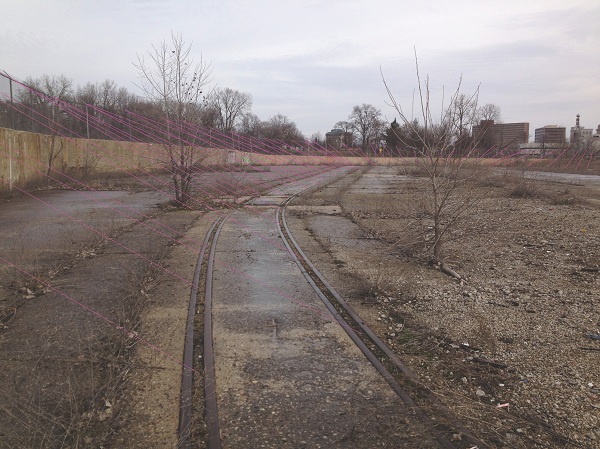
Trellis.  Image courtesy of NAO.

NAO Trellis

New York-based architecture office NAO (thenao.net) constructs a temporary network of colored ropes that will reinterpret the site into a temporary and festive environment to use and play. The geometry of this network is made by connecting the top of the wire fence stretching along the river to the unused freight rail tracks in the field. This network will create a slanted, oblique and porous surface along the fence and the rail. Rather than masking both as oppressive remains of industrial era the network will tied them, and integrate them, into an extraordinary new festival space.
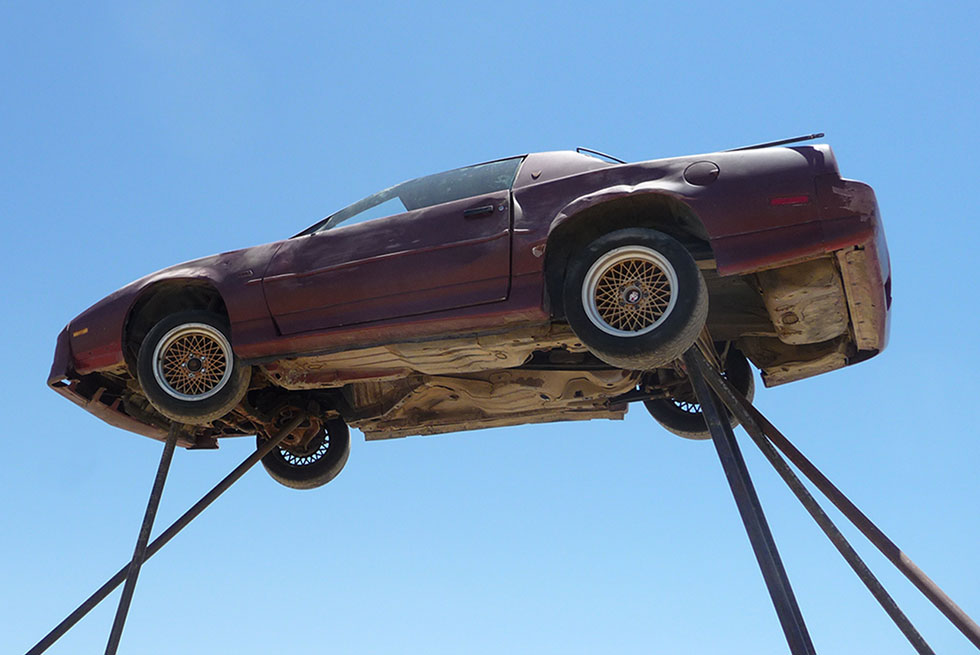
We Build Excitement, 2012, production still. Image courtesy of Jesse Sugarmann.

We Build Excitement

A temporary monument to GM’s discontinued Pontiac Motor Division, produced by artist Jesse Sugarmann. For the Free City Festival, the project takes the form of an ersatz Pontiac dealership at which sculptural and dance performances occur.

Cloud.  Image courtesy of Jae Kim.

Cloud

Boston-based architect Jae Kim produces a floating installation that creates a complex geometric form using everyday materials, including nylon wire and hundreds of plastic straws.

Groundscape

This light installation by architect and artist Catie Newell and students from University of Michigan integrates bio-plastics and a cloth substrate that pulses and fades in response its environment. Groundscape traces the remnants of the railroad tracks, playfully responding to the myriad textures and embedded traces of previous activity throughout the site.
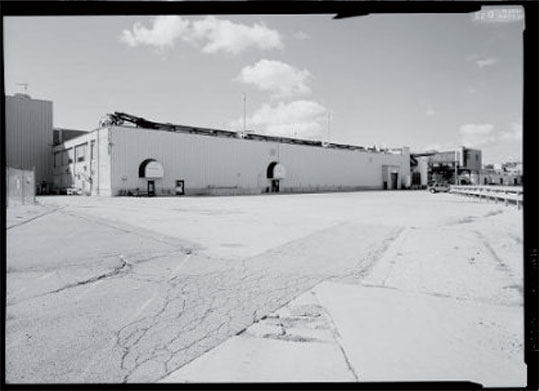
Postcard Futures.  Image courtesy of Jet Lowe.

Postcard Futures

In 1968 photographer Jet Lowe shot “Delphi Flint West, 300 Chevrolet Avenue” in Flint, as part of his work to record significant, often threatened American industrial sites. Architects Natalia Roumelioti and Matthias Neumann invite the public to attempt to identify and reenact the photographer’s vantage point and to share their own photograph of that view to a dedicated Flickr account.

Recovering History

Photographer Farrah Karapetian reimagines abandoned billboards as a sculptural structure to house images made with students at the federal vocational training program Flint/Genesee Job Corps performing their trades. The work honors both the efforts these youth are making to improve their lives as well as the rebuilding of Flint.

Chevy Plants

Flint-based architect Freeman Greer marks the site with reused tires arranged in the form of a Chevrolet logo, planted with switchgrass and sunflo
CEC Artslink outreach in Russia: Nicholas Fraser and Terry Hardy

By Matthew Morowitz

In Russia, September of 2012 was a very active period in regards to the arts.  CEC Artslink not only organized the Art Prospect festival, which was St. Petersburg’s first-ever large-scale public art venue, but they also offered some of the American artists in the festival the opportunity to spearhead works in different parts of the country. Both Nicholas Fraser and Terry Hardy, who had discussed their experiences with Art Prospect in an earlier feature, also took part in the CEC led extra-regional projects.  While Art Prospect was inspired by and loosely worked off of the theme of MODEL (also the theme of AiOP’s 2012 festival), the CEC projects were more open ended.  For Nicholas, this project was an opportunity to explore the juxtaposition of two cultures, American and Russian, and see how the latter adapts to a game of the former.  Terry, on the other hand, used his time to recreate and put his own spin on a work from Peru that had inspired and sat with him years earlier.

“Ground Rules”

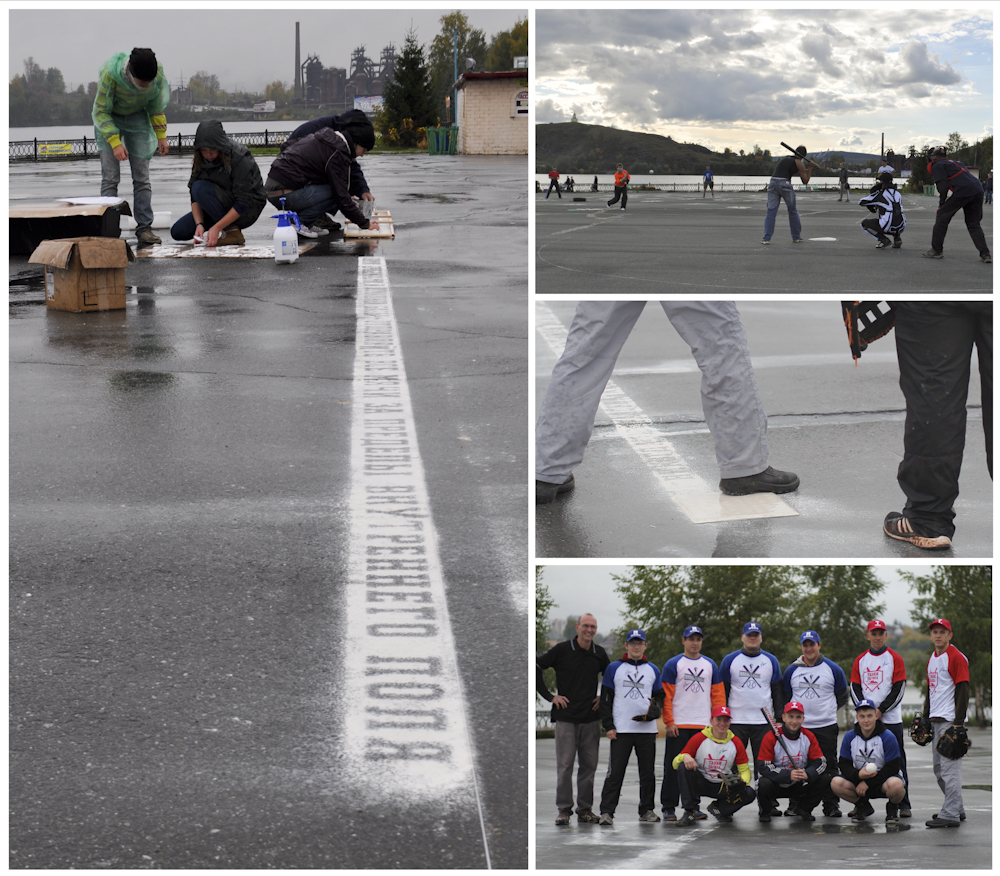
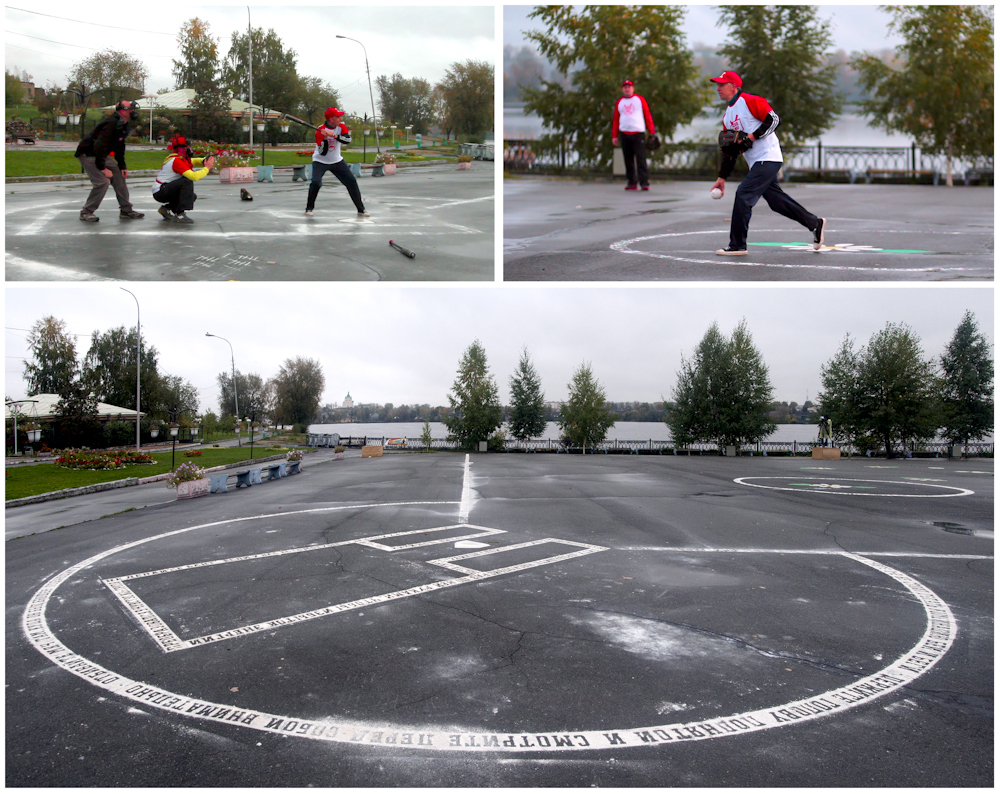
Nicholas Fraser’s performance/installation project, “Ground Rules,” began with teaching a group of steel workers how to play the American game of softball.  In the Russian city of Nizhny Tagil, where the population is largely unfamiliar with the sport, Nicholas brought equipment and held a series of practice sessions to teach the basics of the game.  Teams were selected and outfitted in hats and jerseys with team names and logos designed with input from the players.  A series of games were played in a prominent public park in the city center.  In the white chalk lines defining the playing field, Nicholas embedded translations of the “unwritten rules” of the game.  These rules are not essential to playing the game but are usually learned through direct experience.  The chalk rules were gradually smeared away as players played the game.

“Ground Rules” Photos courtesy of artist.

Nicholas suggests the project functions as a metaphor for the adaptations required by the socioeconomic realities of recent Russian history, mainly how the country has been adapting since the fall of the Soviet Union and the increased westernization that came with transitioning to a free market economy:

“…when the Soviet Union collapsed, there was this system that they had become accustomed to, even if it was perhaps dysfunctional in many ways, and then suddenly they became free market, capitalist country.  Few of these people knew how that system worked; they didn’t know the rules of that particular game.

“Ground Rules” Photos courtesy of artist.

Once Nicholas taught the workers the basics of softball, he noticed they unconsciously began changing and adapting the game to better fit in with the views and understandings of their own culture:

“They adapted it to their own particular culture.  I gave them the basics and I would see them doing things that I hadn’t taught them to do…they reacted to a whole new set of rules, which is very much what they’ve been doing for the last 25 years, figuring out in fits and starts how to be a free market system…they adapted [softball] to their own understanding of what I had explained and their own culture.”

Also, the Metallurgists beat the Tagil Tanks in the final, rain-shortened game, 41-27.

Ground Rules-Preview from nicholas fraser on Vimeo.

“Park of Love”

“Park of Love” photo courtesy of artist.

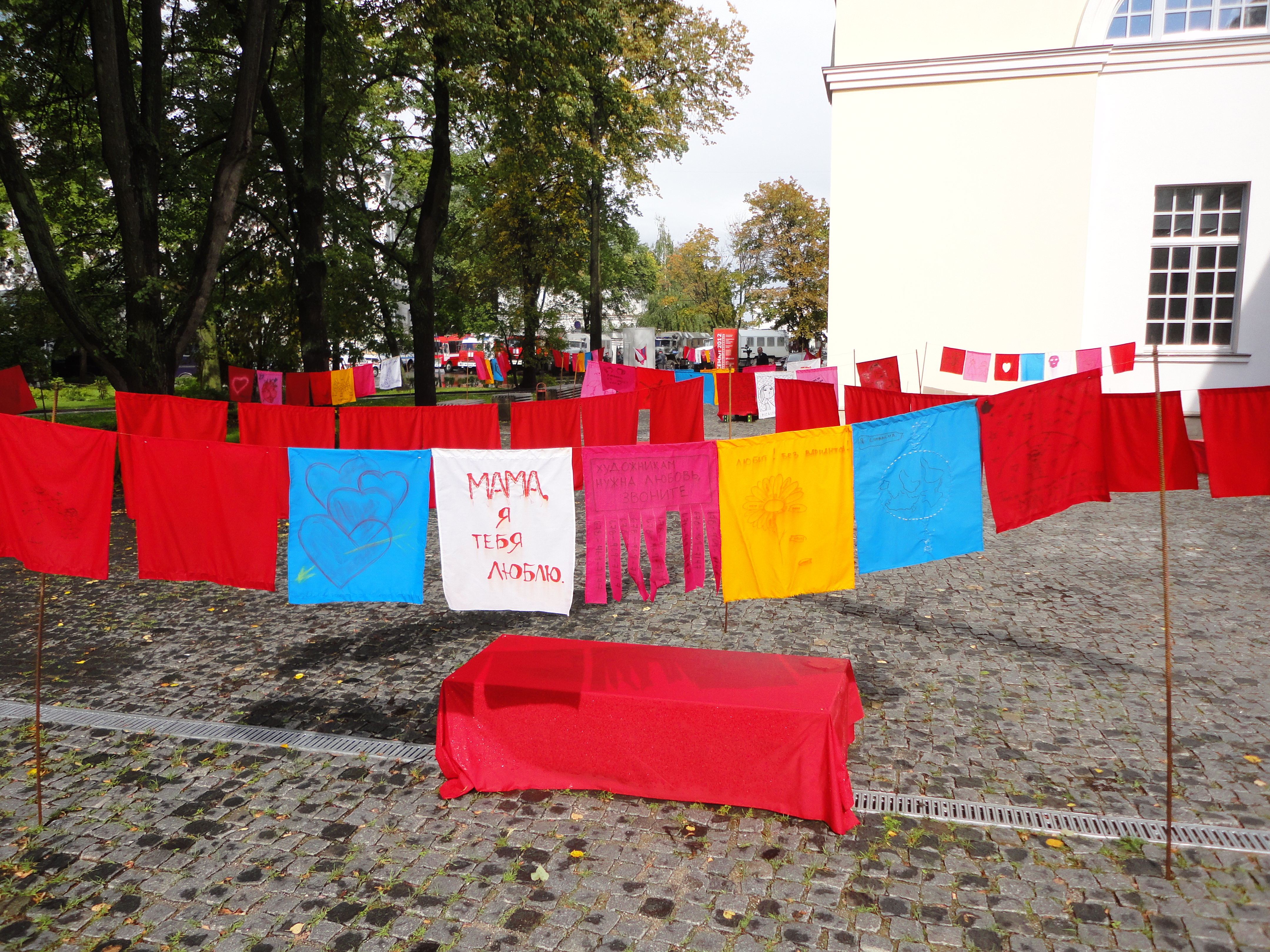
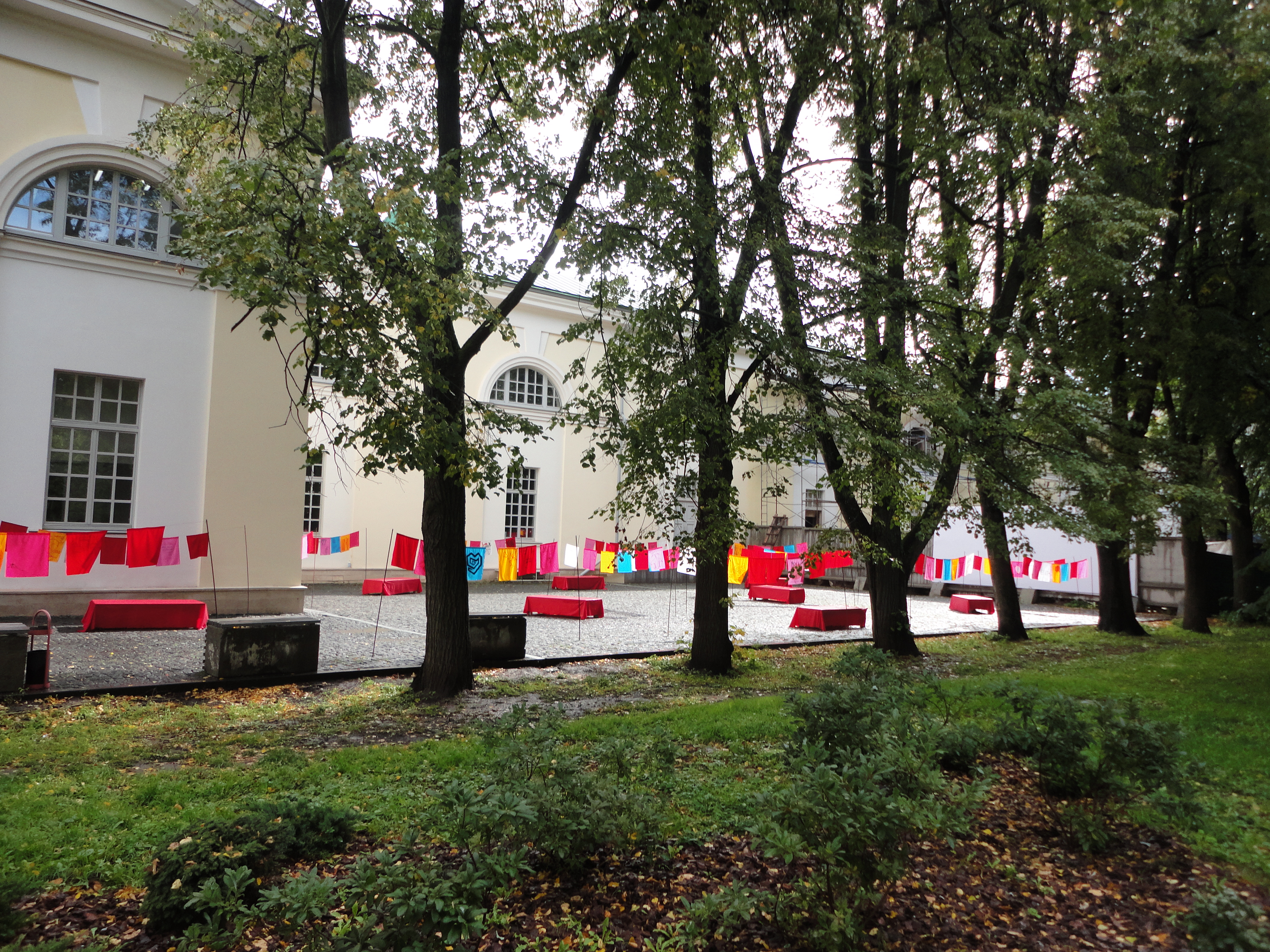
In the town on Nizhniy Novgorod, which is several hours east of Moscow and was only opened to foreigners twenty years ago, Terry Hardy was able to install a project that had been on his mind for years.  After viewing a work of the same name on the banks of the Pacific by the artist Victor Delfin in Lima, Peru, Terry decided in this Russian town he would create his own “Park of Love.”

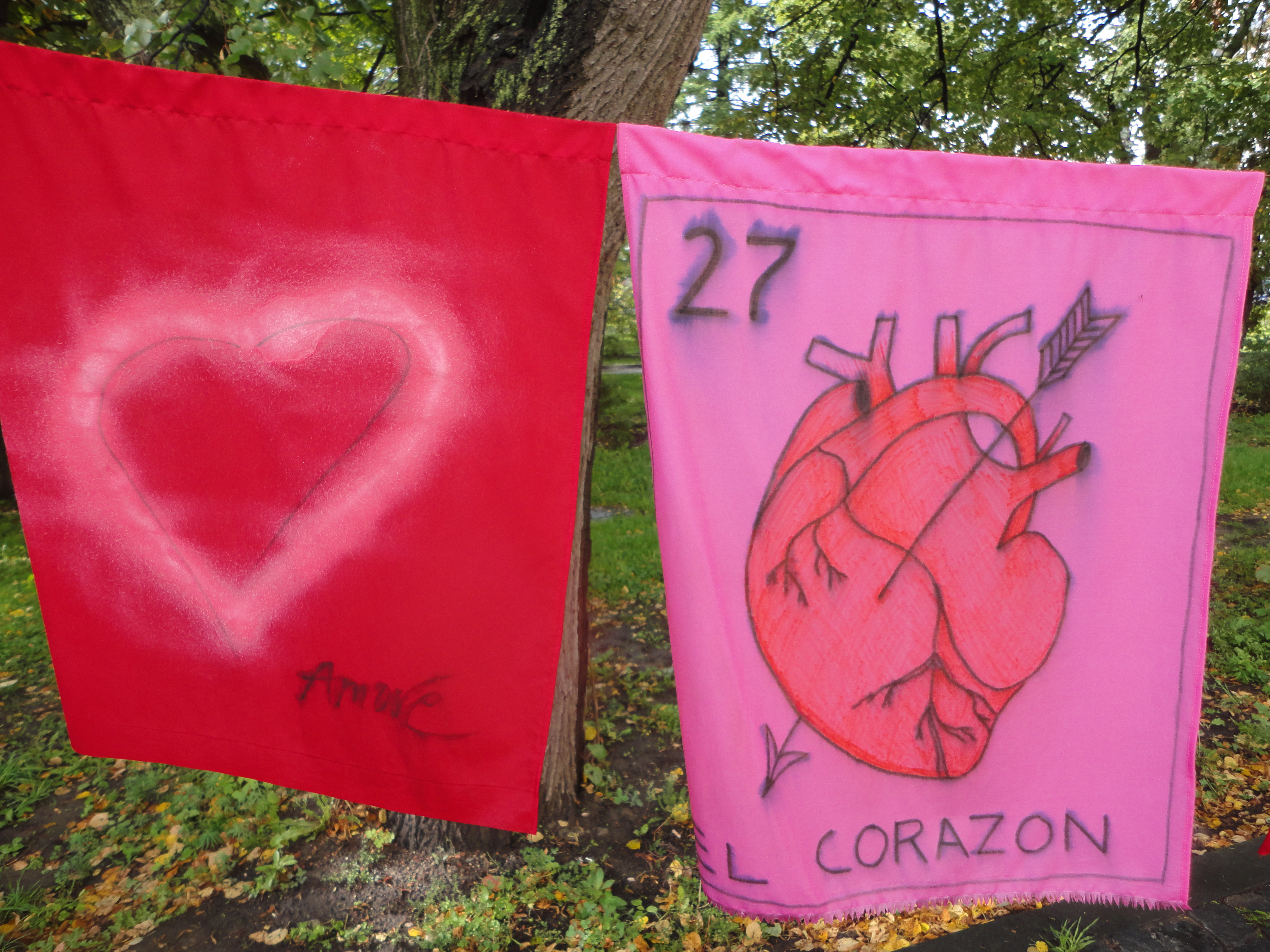
“It has always been my idea to recreate my version of the “Park of Love” using banners, which is what I use often.  Upon arriving [in Nizhniy Novgorod], the next day I was taken to the Arsenal, which is the National Contemporary Art Center, and basically just given the run of whatever I wanted.  I had to produce most everything here in this country [USA] and transport it with me because I didn’t know what would be available once I got there.  Even though they kind of discouraged doing that, it would not have happened otherwise as well as it did.”

“Park of Love” photo courtesy of artist.

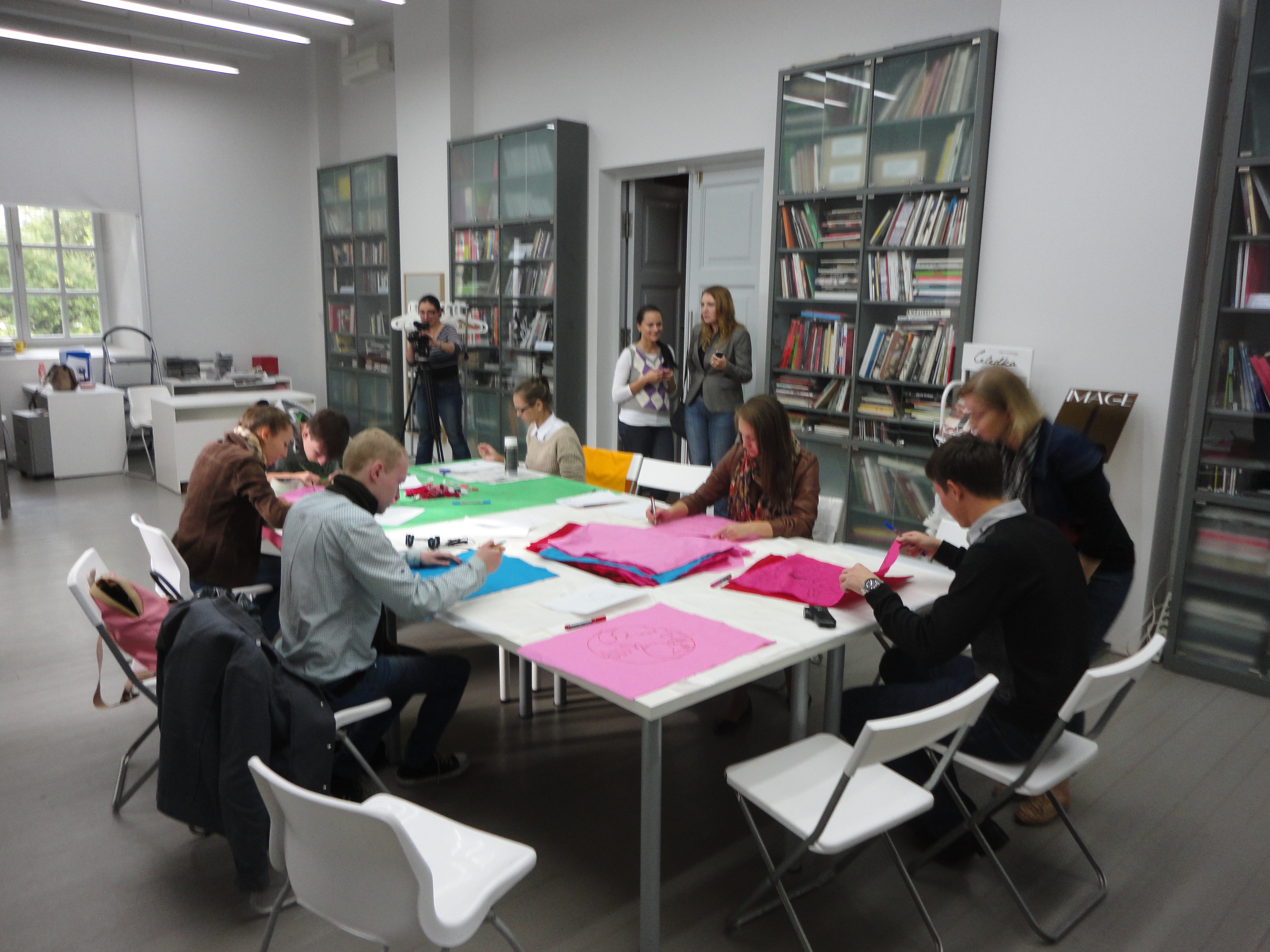
Once stationed at the contemporary art center, Terry gave anyone who came by the chance to make their own banners to be installed in the “Park.”  The National Center for Contemporary Art was very welcoming to Terry and he found the staff, especially his assistant Irina Aganina, to be extremely helpful in facilitating the success of his piece.

“…I took all of my banners, in the colors of love, and camped out at the national contemporary art center and anyone who wanted to come by I had all the art supplies there for each person to do a flag of their feelings of love, thoughts of love, quotes of love, whatever they wanted to do, and it became this really big community project.”

“Making banners at the Arsenal” photo courtesy of artist.

When the work was completed and installed, Terry found that not only was it well received by the general public but also coincided with the anniversary of the town; the festivities thus insured his installation was well attended:

“Ultimately, the last two days I was there I installed the project down on the grounds of the contemporary art center; it was during their 794th birthday, there were a lot of people everywhere, it was just really amazing [seeing] the support I got in that town.  I’ve never been to Russia before and don’t speak the language and it was a little unnerving but it was truly amazing.”

“Park of Love” photo courtesy of artist.